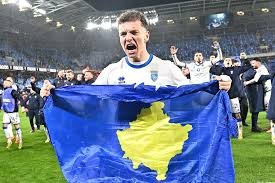
Kosovo vs. Turkey: A Nation’s Dream of World Cup Glory
The nation of Kosovo, still not universally recognized, stands on the brink of history as they face Turkey in a crucial World Cup qualifier. Having only been playing FIFA competitions for a decade, this match represents a monumental opportunity for the team and the country.
A Stadium Buzzing with Hope
The Fadil Vokrri Stadium in Pristina, with a capacity of 14,000, will be overflowing with passion on Tuesday. “It would fit 100,000 if it could,” admits German coach Franco Foda, underscoring the immense significance of this game. Kosovo is poised to make history, aiming for a spot in the next World Cup – a feat unprecedented for this young nation striving for full acceptance within the international community.
A Long Road to Recognition
While much of the UN and NATO recognize Kosovo’s independence, declared in 2008 after years of conflict, Serbia, Russia, China, and five EU members – including Spain, Greece, Romania, Slovakia, and Cyprus – remain opposed. This qualifier is more than just a football match; it’s a statement of identity and a pursuit of legitimacy.
Foda’s Plea for Composure
“We are close to making history. Just one game away, but we face a great rival with great individual talents,” Foda cautions, urging his team to remain calm amidst the fervent support. “Our fans are too sentimental; we must be careful not to let that lead to mistakes. The only path to success is to stay composed.” This comes after a stunning victory over Slovakia in the semi-finals, a nation that doesn’t recognize Kosovo’s independence.
National Pride and Support
Turkey does recognize Kosovo, but the atmosphere in Pristina will be electric, fueled by a sense of national determination. “The Dardanian Gladiators have shown that Kosovo never gives up,” declared Agim Ademi, President of the Football Federation of Kosovo, referencing the ancient Dardanian tribe who inhabited the region. For Kosovo, football is a powerful tool to showcase itself to the world.
Minister of Economy, Hekuram Murati, announced a government commitment of €500,000 to the team following their semi-final win, with a promise of more should they defeat Turkey. Vedat Muriqi, the Mallorca striker and Kosovo’s star player, echoed the sentiment: “We are one step away from the World Cup and making history. We can bring joy to all of Kosovo.”
The Prize: A Place in the World Cup
The winner of the Kosovo-Turkey clash will advance to Group A of the World Cup, joining Australia, Paraguay, and the United States. But for now, in Pristina, the focus is on national pride and the pursuit of a long-held dream.
A Recent History in Football
UEFA and FIFA recognized Kosovo’s place in continental and international football in 2016. Each qualifying match has become a historic claim for the Kosovar people, with football serving as a vital connection to the diaspora. For years, Kosovar youth honed their skills in European academies, often representing other nations, like Granit Xhaka and Xherdan Shaqiri for Switzerland. However, international recognition and entry into UEFA and FIFA have allowed Kosovo to build a talented team that has steadily improved.
A Rising Team
Players like Muriqi, Milot Rashica, Edon Zhegrova, and Florent Muslija represent a generation blending local roots with European training. Franco Foda’s arrival has revitalized the team, and the expansion of the World Cup to 48 teams has fueled their ambition. Despite a challenging start to qualifying, including a 4-0 loss to Switzerland, Kosovo has shown remarkable progress, defeating Sweden twice, drawing with Slovenia, and securing a playoff spot. They’ve also climbed to League B of the Nations League – a testament to their remarkable footballing reconstruction.
Learn more about Kosovo’s history: Wikipedia – Kosovo
Kosovo’s journey is a powerful reminder of how football can be a symbol of hope, identity, and national aspiration.