
Hong Kong Fire Death Toll: A Community Shattered and Calls for Accountability
The global community watched in horror as news broke of a catastrophic high-rise fire in Hong Kong, an inferno that tragically claimed over 100 lives and left hundreds more missing. For Toronto resident Paul Chow, this wasn’t just another headline; it was a deeply personal tragedy unfolding in the very neighbourhood where he grew up and lived for over three decades.
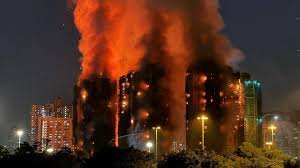
The devastating blaze ripped through seven high-rise towers within the eight-block Wang Fuk Court housing complex in Hong Kong’s Tai Po district. What began on a Wednesday quickly escalated into a prolonged battle for firefighters, who worked tirelessly for approximately 40 hours before the fire was fully extinguished on Friday morning. The sheer scale of the destruction and the tragic hong kong fire death toll sent shockwaves globally, prompting an outpouring of grief and concern.
A Canadian’s Heartache: Paul Chow’s Story
For Paul Chow, the news initiated a harrowing rollercoaster of emotions. “Worry quickly turned to sadness, then distress and anger,” Chow recounted, as he watched his childhood home engulfed in flames from afar. His immediate concern was for his parents and sister, who reside on the seventh floor of one of the affected buildings. Fortunately, his parents were on vacation, and his sister was at work when the inferno erupted, sparing them from physical harm. Yet, the emotional toll remains immense.
Though his loved ones are safe and temporarily housed with family, the reality of their home’s destruction is heartbreaking. They are currently barred from entering their unit to assess the damage, leaving them in a painful limbo. Chow’s personal connection amplifies the collective pain felt by countless families whose lives have been irrevocably altered by this hong kong high-rise fire.
Unravelling the Cause: A Preventable Disaster?
Investigations into the rapid spread of the Wang Fuk Court blaze point to critical factors: foam panels and bamboo scaffolding covered in green mesh netting. These materials, installed by a construction company, are believed to have acted as accelerants, allowing the flames to jump swiftly from one building to the next. Paul Chow firmly believes this was a “human-caused incident,” a preventable disaster in Hong Kong’s history that could have been avoided with proper safety protocols.
This perspective ignites urgent questions about building safety regulations in Hong Kong and the accountability of construction companies. The catastrophic outcome has put a spotlight on the materials used in urban development and the enforcement of fire safety standards, not just in Tai Po district, but across densely populated urban centres.
Calls for Accountability and Support
As the community grapples with the aftermath, calls for accountability are growing louder. Chow expressed his hope that “the people and companies responsible for this tragedy will be held accountable.” Beyond legal repercussions, there’s an urgent plea for the Hong Kong government to take decisive action to ensure affected residents receive adequate support and a warm, safe place to stay while awaiting compensation for their losses.
The devastating hong kong fire has highlighted vulnerabilities in urban infrastructure and the profound impact such events have on communities. With an estimated 300,000 Canadians residing in Hong Kong, this tragedy also resonates deeply within Canada, prompting Global Affairs Canada to monitor the situation closely and offer assistance where needed to Canadian citizens abroad.
The path to recovery for the residents of Wang Fuk Court will be long and arduous. As investigations continue and the community begins the painful process of rebuilding, the memory of the lives lost and the homes destroyed serves as a stark reminder of the critical importance of stringent building safety measures and robust accountability mechanisms to prevent such a devastating fire disaster from ever happening again.



