Is TSA Getting Paid Now? Navigating Airport Chaos During the Shutdown
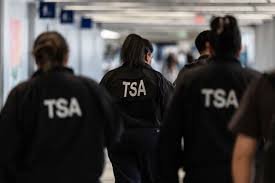
A busy spring break travel season is underway, and travelers are facing significant delays and long lines at airports across the nation. This comes even as the Department of Homeland Security announced that Transportation Security Administration (TSA) workers should begin receiving paychecks after weeks of a partial government shutdown. But is it enough to alleviate the growing crisis?
The Promise of Paychecks and Lingering Uncertainty
President Trump issued a memo on Friday authorizing immediate payment to TSA workers. However, union officials report confusion regarding the implementation of this directive. Johnny Jones, secretary-treasurer of the American Federation of Government Employees’ TSA Council 100, voiced the concerns of many: “Is this temporary, or is TSA fully funded now?” This uncertainty adds to the stress already felt by employees.
The Human Cost of the Shutdown
The shutdown has taken a heavy toll on TSA employees. Nearly 500 have resigned, and thousands more have called out of work, struggling to afford basic necessities like gas, childcare, food, and housing. TSA agents have been forced to make heartbreaking sacrifices to cope with the financial strain of being unpaid for weeks. The average TSA employee earns around $35,000 a year, leaving many living paycheck to paycheck, according to the AFGE.
Stories of Sacrifice and Desperation
The impact is deeply personal. Tatiana Finlay, a TSA worker, has been forced to borrow from her 15-year-old daughter’s birthday fund and ration food to ensure her three children can eat. Rachel, a TSA agent and mother, had to leave work to seek government assistance – a deeply humbling experience. Jackson Oliver, a TSA officer, has taken on a second job while continuing his full-time duties and flight training, all without pay.
Airport Disruptions and Emergency Measures
Staffing shortages have led to hours-long wait times and sprawling lines at major airport hubs, including Baltimore, Houston, New York, and Atlanta. Baltimore/Washington International Thurgood Marshall Airport advised weekend travelers to arrive four hours before their scheduled departures due to unprecedented checkpoint delays. To address the crisis, additional ICE agents were deployed to Baltimore to assist with security screening, allowing TSA officials to focus on passenger and baggage checks.
A Call for Federal Responsibility
Maryland Governor Wes Moore emphasized that ICE agents should not be diverted from their primary duties, calling on the federal government to “get its act together, pay TSA officers, and stop asking ICE agents to do work far outside their scope.” Travelers themselves expressed frustration, with one passenger at Baltimore airport stating, “The US Congress is a disgrace. Absolute disgrace. Both parties.”
Nationwide Impact and Wait Times
As of Saturday afternoon, wait times at New York’s John F. Kennedy International Airport and New Jersey’s Newark Liberty International Airport were around 40 minutes. Orlando, Florida, saw wait times of about an hour. George Bush Intercontinental Airport in Houston experienced lines stretching nearly two hours, despite the assistance of 32 TSA National Deployment Officers. Hartsfield-Jackson Atlanta International Airport, which has been particularly affected throughout the shutdown, saw relatively shorter wait times on Saturday morning.
Looking Ahead: A Future in Question
While the promise of back pay offers some relief, the long-term impact of the shutdown on TSA morale and staffing remains uncertain. As one TSA agent in Orlando noted, the situation has shattered the perception of federal employment as a stable career path. The outpouring of public and union support, including donations of gas cards and gift cards, has been vital in helping TSA workers cope, but a lasting solution is urgently needed.
Sources: CNN