
Wes Moore Marks Two Years Since Key Bridge Collapse, Praises Recovery Efforts
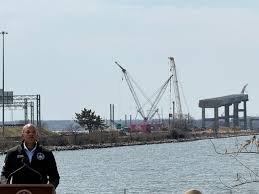
On the two-year anniversary of the devastating container ship crash that brought down Baltimore’s Key Bridge, Maryland leaders, led by Governor Wes Moore, gathered in Dundalk to remember the six lives lost and acknowledge the significant progress made in the recovery and rebuilding efforts. The event served as a poignant reminder of the day that forever changed the state.
“We return to the water’s edge two years after a day that changed our state forever,” Governor Wes Moore stated. “Things look different, but the memories of that March morning remain as clear as ever.” He took a moment to honor the fallen construction workers – Miguel Angel Luna Gonzalez, Maynor Yassir Suazo Sandoval, Alejandro Hernandez Fuentes, Dorlian Ronial Castillo Cabrera, Carlos Daniel Hernández, and Jose Lopez – recognizing them as patriots.
A Testament to Resilience and Rapid Response
Governor Wes Moore also lauded the swift and dedicated response of those who worked tirelessly in the aftermath of the collapse. He emphasized the state’s determination to overcome the immense challenges posed by the twisted steel and uncertain waters. “We faced enormous obstacles…livelihoods at risk,” Moore said. “But the skeptics could not stop our people. When they said clearing the channel would take 11 months, Maryland got it done in 11 weeks.”
Progress on the New Key Bridge Construction
Transportation officials provided an update on the construction of the new Francis Scott Key Bridge. A massive, 500-ton crane, one of the largest on the East Coast, dominates the landscape of the Patapsco River. The constant sound of pile driving signals the ongoing work to establish a solid foundation for the new structure.
James Harkness, lead engineer for the Maryland Transportation Authority, explained the scale of the undertaking: “That pile is eight foot in diameter and over 200 feet in length. It is one and a half inches thick.” Each pile, weighing approximately 350,000 pounds, is crucial for supporting the future bridge. “We are driving that down until we are able to reach the solid soil that is below the surface of the water. We have to go pretty deep, because we have some very challenging conditions out on the river,” Harkness added.
A temporary construction trestle is also being built to facilitate access for contractors working on the piles. Dozens of these piles will eventually form the foundation of the new bridge.
Fastest-Moving Infrastructure Project in the US
Governor Wes Moore highlighted the remarkable speed of the project, stating that it is “the fastest moving large infrastructure project in the United States,” a claim supported by U.S. Secretary of Transportation Sean Duffy. While precise cost and completion timelines are still being finalized, the state is making significant strides. Initial estimates suggested a completion date by the end of 2030, but the design phase is nearing completion, with a more definitive schedule expected in June.
“We’re working on the estimating and negotiation over the next couple months,” Harkness noted. “So that’s where we’ll be able to have the agreed upon cost and schedule for the bridge.”
Governor Wes Moore expressed his unwavering commitment to reopening the Francis Scott Key Bridge during his tenure. “The Dali struck the Key Bridge during my tenure,” Moore said. “Yet, I plan on being the governor who cuts the ribbon to reopen the Francis Scott Key Bridge.”
Learn more about infrastructure projects and transportation updates at the U.S. Department of Transportation.



