
FBI Faces Court Test in 2020 Election Probe
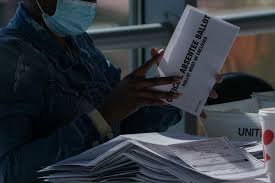
The U.S. Department of Justice is facing its first public court challenge regarding its investigation into the 2020 election results. The case centers around a lawsuit seeking the return of ballots seized by the FBI from the Atlanta area in an unprecedented move earlier this year. This legal battle is drawing intense scrutiny and raising critical questions about the scope and justification of the investigation.
Investigation Driven by Trump Allies
The litigation has already revealed that the probe is being significantly influenced by allies of former President Donald Trump, individuals with a history of promoting debunked theories of widespread election fraud in 2020. The involvement of Director of National Intelligence Tulsi Gabbard during the ballot seizure has further fueled concerns, as her office lacks jurisdiction over domestic election administration. Notably, the FBI’s warrant application did not allege any foreign interference in the election.
Fulton County Officials Fight Back
Fulton County Board of Commissioners Chairman Robert Pitts and other local officials are actively suing to have the seized materials returned. They contend that the FBI misled the magistrate judge who approved the warrant by allegedly withholding crucial information during the application process. The Justice Department defends its actions, arguing that the county officials haven’t met the stringent requirements for the return of election materials.
Key Concerns and Potential Implications
Friday’s hearing is being closely watched for insights into the broader investigation, which also includes a grand jury subpoena for 2020 election records in Arizona. County officials have warned U.S. District Judge JP Boulee, a Trump appointee, that without clear legal safeguards, the FBI could potentially use similar warrants to seize ballots even during ongoing recounts in contested states. This concern underscores the importance of Judge Boulee’s decision.
Michael Moore, a former U.S. attorney in Georgia, emphasized the long-term implications, stating that the judge’s ruling must not be “used as a weapon in the fall of 2026.”
The Origins of the Probe
The warrant was requested by U.S. Attorney Tom Albus from Missouri, who is also serving as a “special attorney” within the Justice Department tasked with investigating election issues nationwide. The investigation was reportedly initiated based on a referral from Kurt Olsen, a lawyer involved in Trump’s attempts to overturn the 2020 election and now serving as the White House’s director of election security and integrity.
Allegations Under Scrutiny
The Justice Department is investigating alleged discrepancies in the county’s scanned ballot images, purported “irregularities” in tabulator tapes, and claims that some absentee ballots lacked proper fold marks. The department alleges potential violations of federal statutes requiring the preservation of voting records for 22 months and prohibiting tampering with the vote. However, many of the allegations cited by the FBI have been previously raised and largely debunked.
Credibility of Witnesses Questioned
The county argues that the Justice Department failed to disclose the full context of the allegations and presented witnesses with questionable credibility. They filed a declaration from election expert Ryan Macias to counter claims of unlawful handling of the election. The DOJ should have informed the magistrate judge that the affidavit cited witnesses who had faced court sanctions or had other credibility issues.
Judge Boulee’s Role and Upcoming Hearing
While Judge Boulee denied Fulton County’s request to compel the FBI agent, Hugh Raymond Evans, to testify at Friday’s hearing, he acknowledged the significance of the legal questions at hand. He will allow both sides two-and-a-half hours to present evidence, cross-examine witnesses, and make legal arguments.
Potential Precedent and Legal Arguments
The Justice Department warns that siding with Fulton County could “open the floodgates” to challenges of search warrants used as a means to gain access to ongoing criminal investigations. Ironically, the Trump administration is leveraging its recent appeals court loss in the Mar-a-Lago case to argue against judicial interference in the 2020 election probe.
Shifting Legal Landscape
Lawyers who previously represented Trump in the Mar-a-Lago case now hold key positions within the Justice Department, including Todd Blanche as deputy attorney general and Stanley Woodward as the department’s no. 3 lawyer. Fulton County contends that the DOJ is misapplying the appeals court precedent from the Mar-a-Lago case, arguing that they are operating under a different legal framework – the “callous disregard” standard outlined in Rule 41(g).
Source: CNN



