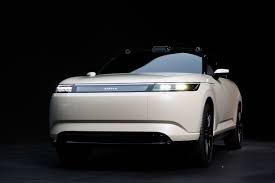
Electric Cars: The Demise of Sony-Honda’s Afeela and the US EV Market
Sony-Honda is no longer pursuing its vision of a video-game-inspired electric vehicle. This week, the Japanese joint venture abruptly canceled the Afeela project, halting development of both the Afeela 1 and a second, unnamed model. The decision comes as Honda reassesses its broader electric vehicle strategy following a significant financial loss and shifts in the global EV landscape.
A Shift in Strategy
Sony Honda Mobility (SHM) attributed the cancellation to Honda’s revised EV plans. Earlier this month, Honda scrapped its “0 Series” lineup of electric vehicles after reporting a $15.7 billion loss. This change meant the joint venture “will not be able to utilize certain technologies and assets that were originally planned to be provided by Honda,” according to a press release. Reservation holders will receive full refunds, and discussions regarding the future of the Sony-Honda partnership will continue.
The Afeela: A Concept Ahead of Its Time?
The Afeela, initially unveiled in 2020 as the Vision-S, was showcased at CES for four consecutive years. While innovative, the concept arguably felt stale by its latest iteration in January 2024. The idea of a “computer on wheels” was novel in 2020, but now a “software-defined vehicle” is becoming the industry standard.
Specs and Market Challenges
The Afeela 1, planned as an electric sedan, faced several hurdles. It was slated for a 2026 release, initially limited to California buyers. Its estimated 300-mile range paled in comparison to competitors like the Lucid Air (420 miles), Mercedes-Benz EQS (390 miles), and Rivian R1 (410 miles). Furthermore, its $90,000 price tag lacked competitiveness in a rapidly evolving market.
Entertainment vs. Practicality
The Afeela 1 heavily emphasized in-car entertainment, featuring screens, PlayStation Remote Play integration, and numerous apps. However, the demand for such features remains uncertain, especially as true self-driving capabilities remain elusive. The question remains: do consumers prioritize gaming while commuting, or do they desire a more practical driving experience?
The US EV Market: A Stalling Revolution?
Sony-Honda’s challenges mirror broader issues within the US electric vehicle market. Consumer adoption has slowed since the reduction of federal incentives for both EV buyers and manufacturers. BloombergNEF revised its 2030 EV sales projection from nearly 50% to 27% – a decrease of 14 million car sales. Honda, a late entrant to the EV space, appears hesitant to invest heavily in a market facing such uncertainty.
The story of the Afeela serves as a cautionary tale, highlighting the complexities and challenges facing the US EV market. It’s a reminder that technological innovation alone isn’t enough to guarantee success; market conditions, consumer demand, and strategic alignment are equally crucial.