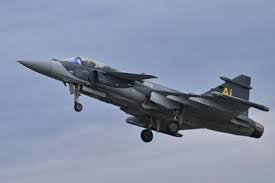
The Great Canadian Fighter Jet Debate: Why Sweden’s Gripen is Challenging the F-35
Canada finds itself at a pivotal crossroads, grappling with a multi-billion-dollar decision that could redefine its defence capabilities and industrial landscape for decades. The long-standing quest to replace the venerable CF-18 Hornets has taken an unexpected turn, with Sweden’s Gripen fighter jet emerging as a compelling alternative to the U.S.-made F-35, which Canada had previously committed to acquire. This isn’t just about military hardware; it’s about economic strategy, national sovereignty, and the future of Canada’s aerospace industry.
The F-35 Commitment: A Soaring Cost and Strategic Concerns
In 2022, the Trudeau government announced its intention to purchase 88 F-35 fighter jets from Lockheed Martin, a deal initially valued at approximately $19 billion. However, recent reports from Auditor General Karen Hogan have revealed a significant cost escalation, pushing the total to an estimated $27.7 billion, with an additional $5.5 billion to achieve full operational capability.
Beyond the escalating price tag, deeper concerns have surfaced. Prime Minister Mark Carney has reportedly initiated a “review” on a significant portion of the F-35 order, influenced by rising trade tensions and strategic shifts. Critics highlight the potential for reliance on a foreign power for critical military supplies, particularly given the F-35’s reliance on proprietary software updates and spare parts from Lockheed Martin. This raises serious questions about Canada’s defence independence and vulnerability to geopolitical pressures. Countries like India and Spain have already opted against the F-35, citing similar trade-related issues.
The Gripen Advantage: Made in Canada?
Enter the Gripen. Sweden’s Saab AB, the manufacturer of the multi-role supersonic jet, has presented an enticing proposition: build the Gripen in Canada if Ottawa chooses their aircraft. This offer directly aligns with Prime Minister Carney’s focus on industrial development and could breathe new life into a near-dormant Canadian defence aerospace industry.
Saab estimates that Canadian production of the Gripen, and potentially its GlobalEye surveillance planes, could generate approximately 13,000 jobs. Furthermore, there are active discussions between Saab and Montreal’s Bombardier Inc. regarding a potential joint venture to manufacture Gripens in Toronto and Montreal. This commitment to local production offers significant economic benefits for Canada, fostering skilled jobs and technological advancement within the country.
Beyond Price: Strategic Independence and Intellectual Property
One of the most powerful arguments for the Gripen lies in Saab’s willingness to transfer the intellectual property (IP) for the aircraft to Canada’s defence industry. As Foreign Minister Mélanie Joly has emphasized, owning the IP for major purchases is crucial for national autonomy. This move would grant Canada unprecedented control over its fighter fleet, allowing for domestic upgrades, maintenance, and modifications without needing permission from a foreign capital. This contrasts sharply with the F-35 model, where access to crucial software updates and spare parts could potentially be withheld, rendering the sophisticated aircraft inoperable under certain circumstances.
Performance Where It Counts: Arctic Ready and Rapid Deployment
While the F-35 boasts advanced stealth capabilities, defence experts acknowledge that the Gripen offers advantages highly pertinent to Canada’s unique operational needs. The Royal Canadian Air Force (RCAF)’s primary tasks include defending Canada’s Arctic sovereignty and conducting reconnaissance and rescue missions in the Far North.
The Gripen, renowned for its operational flexibility, can land and take off from shorter, less developed runways and has a rapid turnaround time for refuelling and rearming in combat zones. Crucially, it tends to outperform the F-35 in harsh weather conditions, including the extreme cold prevalent in the Arctic. Its robust design and adaptability make it a potentially more suitable and reliable asset for the challenging Canadian environment. Furthermore, Canadian-made Gripens could open up significant export potential, with countries like Ukraine reportedly expressing interest, creating an additional revenue stream and strengthening Canada’s position in the global defence market.
A Diplomatic Plea and a Friend Indeed
Sweden is making a strong diplomatic push for the Gripen. A recent royal visit to Ottawa by King Carl XVI Gustaf and Queen Silvia, accompanied by senior government officials and top business executives (including Marcus Wallenberg of the Saab-owning industrial dynasty), underscored the depth of Sweden’s commitment. As Sweden’s Deputy Prime Minister Ebba Busch articulated during her visit, “In difficult times you should really choose your friends wisely… And this is the reason Sweden is choosing Canada.” This sentiment highlights the potential for a deeper, more reciprocal partnership built on mutual trust and shared industrial goals.
The Road Ahead: A Crucial Decision for Canada
The choice before Canada is complex, extending far beyond the initial purchase price of a new fighter jet. It encompasses the revitalization of a vital domestic industry, the assurance of strategic independence, and the acquisition of an aircraft optimally suited for the country’s diverse and challenging operational requirements. The Canada fighter jet competition is not merely a procurement exercise; it’s a strategic decision that will shape Canada’s defence posture, economic future, and international relationships for generations to come.
For more insights into Canada’s defence procurement policies, visit the official government website.