A Close Encounter: Meteorite Explodes Over Houston, Damages Home
On Saturday, a dramatic event unfolded over the skies of Houston, Texas. A meteorite, estimated to be 3 feet wide and weighing approximately a ton, pierced the Earth’s atmosphere at a staggering 35,000 miles per hour. The celestial visitor exploded with the force of 26 tons of TNT, approximately 30 miles above North Houston, creating a sonic boom heard across the region.
From Space to Your Ceiling: A Direct Hit
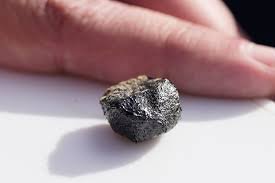
What makes this event truly remarkable is that a fragment of the meteorite – now classified as a meteorite after reaching the ground – actually crashed through the ceiling of a North Houston home. According to Ponderosa Fire Chief Fred Windisch, the meteorite bounced after impact, striking the ceiling a second time. Homeowner Sherrie James described the event as receiving a “visitor from out of SPACE” and has launched a GoFundMe campaign to cover the resulting damage.
The Science Behind the Spectacle
NASA has dubbed the meteorite’s path the “Chicken Little trajectory,” noting its flight path over Tomball and Cypress, just 15 miles west of George Bush Intercontinental Airport. As meteors enter the Earth’s atmosphere, immense pressure builds up. Most break apart due to this pressure, creating spectacular explosions. Sean Gulick, a research professor at the University of Texas at Austin, explains that these explosions create a “strewn field” – a directional spread of fragments.
“It is ironic that NASA spends millions and billions of dollars to collect rocks from space, and one comes to visit all by itself,” remarked Carolyn Sumners, vice president for astronomy at the Houston Museum of Natural Science.
Are Meteorite Impacts Common?
While this event is certainly unusual, it’s not entirely unprecedented. Less than a week prior, a similar event occurred above Cleveland, Ohio, involving a larger, 7-ton meteorite. Experts believe the two events may be related. Gulick notes that the Earth’s atmosphere is regularly struck by space debris, but most objects burn up before reaching the ground, appearing as “shooting stars.”
- An asteroid the size of a car reaches Earth’s atmosphere roughly once a year to once a decade.
- A football field-sized meteor impacts Earth approximately every 2,000 years.
- Catastrophic, civilization-threatening meteor impacts occur every few million years.
Insurance and Valuable Fragments
Fortunately, most standard homeowners insurance policies cover damage caused by falling objects, including meteorites, according to the Insurance Information Institute (Triple-I). However, meteorite fragments themselves can be quite valuable, with some rare specimens fetching up to $100 per gram. Experts recommend bringing any recovered fragments to research institutions like the Houston Museum of Natural Science for analysis.
A History of Impacts
While injuries from meteorite impacts are rare, they have occurred. The first documented case was in 1954, when a meteorite crashed through an Alaska woman’s home. In 2013, a meteor exploded over Russia, causing a shock wave that injured over 1,600 people, primarily from broken glass.
Learn more about meteorites and space exploration at NASA’s official website.