
France’s Municipal Elections: A Shift in the Political Landscape
The recent municipal elections in France have sent ripples through the political landscape, with the Rassemblement National (RN), Marine Le Pen’s far-right party, hoping to secure its first major city win in Marseille. Meanwhile, in Paris, the battle between the left and right is incredibly close, setting the stage for a dramatic outcome.
Marseille: A Potential Breakthrough for the RN
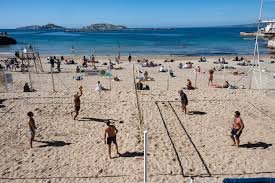
“The people of Marseille are tired of being harassed, assaulted, and robbed when they go to the beach,” asserts Franck Allisio, the RN candidate for Marseille, in an interview with Le Devoir. On the Plage des Catalans, near the Vieux-Port, young people of diverse backgrounds enjoy the early summer sun. However, this could change if the RN takes control of the city hall on Sunday. The party has campaigned heavily on the issue of insecurity, promising increased police presence and cuts to funding for immigrant aid organizations.
A controversial proposal, the “anti-hooligan pass,” has garnered significant attention. The RN maintains this is simply about reserving beach space for families and seniors while bolstering police presence. However, critics argue it’s a thinly veiled form of discrimination. “When they use the word ‘hooligan,’ all the people of Marseille know it refers to young people from working-class backgrounds, particularly Black and Muslim youth,” notes Esther Dakhli, a Tunisian-origin student. Her friend, Esther Seignon, adds, “As a young white woman, I know I’m not the target.”
During door-to-door campaigning in Saint-Mitre, a suburb that has become a stronghold for the RN, Allisio stated, “People here are fed up with the chaos imposed by the left.” Jean-Marc Balboni, a local butcher, enthusiastically welcomed the RN campaigners, lamenting the changing face of the neighborhood. “Before, there were plenty of butcher shops and bakeries here; now there are also kebab shops and late-night grocery stores,” he complains. “It attracts a certain element… we need to give the beaches of Marseille back to the Marseillais, and France back to the French!”
A Rising Tide for the RN Across France
In the first round of elections last Sunday, the RN secured 35% of the vote in Marseille, nearly doubling its 2020 result. The party came in just behind the “Printemps marseillais” coalition of the left and well ahead of the candidate supported by the right and President Emmanuel Macron’s camp. “The RN has siphoned off voters from the traditional right, even attracting well-known figures from that side,” explains Christèle Lagier, a researcher at the Institute of Political Studies in Aix-en-Provence. “This is a trend occurring throughout France, but it has been particularly pronounced in Marseille, where wealth disparities are significant.”
Amine Kessaci, a candidate with the outgoing left-wing majority, acknowledges the issue of insecurity. Having lost two brothers to drug-related violence, he argues that the far-right doesn’t address the root causes of the problem: “Employment, housing, urban planning, leisure… if young people lack opportunities, they are more easily recruited by drug traffickers.” He advocates for increased community policing.
The RN’s strong showing initially positioned them as favorites to win the mayoralty. However, the last-minute withdrawal of La France Insoumise (LFI), Jean-Luc Mélenchon’s radical left party, to “block the path of the far-right,” has complicated matters. Lagier notes that LFI voters may not necessarily turn out to vote against the RN due to deep divisions within the left.
The situation in Marseille mirrors a broader trend across France. The RN, historically weak in municipal elections, has increased its scores almost everywhere, particularly along the Mediterranean coast. Its ally, Éric Ciotti, is poised to win the mayoralty of Nice, marking the first major city for the far-right. However, the traditional right is expected to retain most smaller towns through alliances with Macron’s centrist camp.
Paris: A Nail-Biting Finish
The presidential camp was largely absent from this campaign,” Lagier analyzes. On the left, LFI has also made significant gains, particularly in disadvantaged suburbs of Paris, consistently exceeding 10% in most major cities.
In Paris, the race is particularly tight. The policies of outgoing Mayor Anne Hidalgo, often cited as a model by Valérie Plante (Montreal’s mayor), have transformed the city with extensive bike lanes, pedestrianized riverbanks, and a 25% increase in social housing. However, these changes have also deeply polarized Parisians, especially in the wealthier western districts where car ownership remains dominant.
With Hidalgo not seeking re-election, her deputy, Emmanuel Grégoire, is the candidate for the moderate left alliance. He faces Rachida Dati, a high-profile former Justice Minister under Nicolas Sarkozy and, until recently, Minister of Culture. Known for her outspoken and often abrasive style, Dati launched a strong social media campaign focusing on insecurity and transportation, even filming herself confronting cyclists and homeless individuals.
Despite trailing Grégoire by 12 points in the first round, Dati has staged a remarkable comeback by forming an alliance with Macron’s candidate, Pierre-Yves Bournazel, and benefiting from the withdrawal of far-right candidate Sarah Knafo. Grégoire, however, failed to secure an agreement with the radical left, jeopardizing his chances in the second round.
Should Dati win, her tenure as mayor could be short-lived. She faces a corruption trial in September, accused of illegally receiving €900,000 from a car manufacturer while a Member of the European Parliament, potentially leading to her removal from office. “At least if she wins, she might not stay for long,” jokes Jean-Pierre Rasslan, a voter supporting Grégoire.
Further Reading:



