
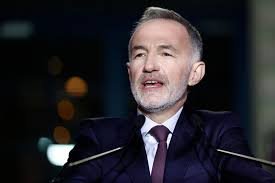
Emmanuel Grégoire: Paris’s New Leader
Following his election on Sunday, Emmanuel Grégoire has secured Paris for the left, concluding a challenging campaign where he overcame a significant lack of public recognition compared to the highly visible former minister, Rachida Dati. Estimates suggest he garnered between 50 and 53% of the vote. This 48-year-old, with greying hair and a neatly trimmed beard, succeeds Anne Hidalgo, who led the city for 12 years, having served as her deputy from 2018 to 2024. Prior to that, he held the position of Deputy Mayor responsible for Human Resources and Budget from 2014 to 2018.
“Being mayor is something I’ve been preparing for, for years and years,” Grégoire stated in February. His experience includes serving as Chief of Staff (2009-2012) under previous mayor Bertrand Delanoë, who won Paris for the left in 2001. Born in a working-class suburb northeast of the capital, Emmanuel Grégoire is also a Member of Parliament for Paris since 2024, representing a district within the 12th arrondissement where he began his socialist engagement, breaking with his family’s communist tradition.
A Background Rooted in Public Service
The son of a teacher and a civil servant, Grégoire also spent time as a consultant in a medical consulting firm. He took a break from his Parisian political career between 2012 and 2014, working in the office of Socialist Prime Minister Jean-Marc Ayrault. Known for his diligence and aversion to conflict, supporters describe him as “the man who could solve impossible problems.”
“When something wasn’t moving forward, he could bring everyone together and find a solution,” Antoine Guillou, Deputy Mayor of Paris, told AFP in July. He readily admits to a “compulsive relationship with work” and welcomes being described as “rigorous, hardworking, and knowledgeable.”
Beyond the Public Persona
However, Grégoire acknowledges that his public image can appear “a bit dull,” a contrast to his true self. He insists he is “hyper happy, hyper playful, hyper simple.” A former member of the Socialist Party (PS) describes him as “a friendly guy, but an apparatchik – in a neutral sense. He has a real political skill.”
Grégoire is private about his personal life, except to mention his “tribe” – a blended family of five children aged 9 to 20. During the campaign, he faced a particularly assertive opponent in Rachida Dati, who actively engaged with the public and utilized platforms like TikTok. He opened up about deeply personal experiences, including the suicide of his brother, stating on social media, “My Juju decided that life was too heavy.”
Addressing Difficult Issues
Following reports of sexual abuse involving school supervisors in Paris, Grégoire revealed he was also a victim of sexual violence as a child, describing it as a “silent wound.” He committed to a complete overhaul of safety measures, demanding “immediate results.”
Throughout the campaign, he sought to differentiate himself from Anne Hidalgo, while still upholding her legacy. He pledged to continue policies supporting cycling, expand green spaces, and prioritize affordable housing in a city facing soaring real estate prices. He also promised to maintain Paris as a “city of refuge” and a stronghold against the right and far-right, particularly with the National Rally gaining prominence in France and being considered a frontrunner in the 2027 presidential election.
Further Reading: For more on French politics, visit Le Monde.



