Disney Star Wars: A New Hope for Franchise Stewardship
When Disney acquired Lucasfilm, the initial reaction was one of anxiety – and understandably so. Star Wars wasn’t just another entertainment property; it was a modern mythology with a fiercely loyal fanbase. The fear wasn’t simply that Disney would “sanitize” the galaxy, but that it would flatten it, turning a complex universe into a content factory. However, the more compelling narrative, especially now, is that Disney didn’t just preserve Star Wars; it created a new way to experience it.
Navigating the Galaxy: Disney+ as a Functional Map
The most significant achievement of the Disney+ era isn’t a single show or character, but the platform itself. For decades, Star Wars was consumed in fragmented pieces – theatrical trilogies, prequel trilogies, animated series, novels, and games requiring significant fan effort to assemble. Disney+ transformed the franchise into an accessible timeline, a curated sequence that invites viewers to explore eras intentionally. You can witness the galaxy’s evolution not as a random playlist, but as a cohesive narrative architecture. This experience is akin to reading an interconnected series of novels rather than catching up on blockbusters.
This matters because Star Wars thrives not as isolated “events,” but as a living history. Streaming, when implemented thoughtfully, provides a sense of historical continuity. The current Star Wars ecosystem often creates a “puzzle effect,” the feeling that pieces were always meant to fit, even if they weren’t originally planned.
Animation as Foundation: Beyond the Films
To understand Disney’s nurturing of the franchise, it’s crucial to recognize the importance of animation. Star Wars: The Clone Wars isn’t supplemental viewing; it’s foundational. It deepens character motivations, complicates allegiances, and adds emotional weight to events that feel superficial in the films alone. The Bad Batch continues this animated legacy, bridging the gap between the Clone Wars and the early Empire. This approach demonstrates stewardship rather than mere exploitation.
Andor: Political Realism and Emotional Infrastructure
Then there’s Andor, a series that masterfully ties back into Rogue One, revitalizing the film and revealing the human cost behind the rebellion. Andor’s genius lies in its restraint, portraying the rebellion as a lived political reality, not a marketing logo. The Empire is terrifying not because of superweapons, but due to bureaucracy, surveillance, and the normalization of fear. The show’s brutalist architecture also contributes to a richly developed visual universe. The tragic ending feels earned, highlighting that sacrifice isn’t cinematic, but administrative, exhausting, and often anonymous.
The Mandalorian: A New Entry Point
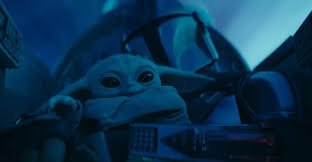
The Disney+ timeline creates an emotional flow. After the weight of Andor and the inevitability of Rogue One, viewers can seamlessly transition into The Mandalorian. Despite the tonal shift – political realism to frontier myth – it works because both are grounded in consequences. The Mandalorian isn’t escapism without stakes; it’s a story about identity, loyalty, and survival in a collapsing regime. It created a new entry point without requiring completism, while still rewarding dedicated fans. Grogu, a character designed for instant icon status, is written with enough mystery to feel authentic.
Expanding the Universe: Fortnite and Beyond
Disney’s willingness to take risks is evident in the Boba Fett pivot, portraying a flawed hero rather than a traditional blockbuster archetype. But the most innovative step is the integration with platforms like Fortnite. The recent Fortnite: GALACTIC BATTLE season, featuring X-wings, TIE Fighters, and even a live in-game event, demonstrates a new level of collaboration. More significantly, Disney+ premiered episodes of Star Wars: Tales of the Underworld within Fortnite, blurring the lines between streaming and gaming. This shift in distribution logic brings the story to where the audience already is.
Account linking between Epic Games and MyDisney accounts further integrates these ecosystems, hinting at a future where streaming subscriptions, game identity, and franchise participation are interconnected.
A Living Universe, Not a Museum
The reason audiences increasingly perceive Star Wars as “all connected” is due to deliberate sequencing. The franchise is managed as a timeline, creating the illusion of foresight. This is the result of careful writing, story groups, and showrunners who understand that continuity isn’t trivia, but emotional logic. Disney treated Star Wars as a living universe, accessible without being shallow, expanding the timeline without breaking it, and using animation as canon.
In an era where legacy franchises often falter, Star Wars continues to generate anticipation, not just for what’s next, but for how it will connect to what came before. Disney turned the galaxy back into a story you can travel through, one chapter at a time.
Zarko Davinic is an architect by education, Founder and Editor-in-Chief at DSCENE Publishing, having studied at the Faculty of Civil Engineering and Architecture in Niš, Serbia. In 2007, he founded DSCENE, which grew into an international publishing network with MMSCENE, ARCHISCENE, and DSCENE Beauty. Today, the platform features two globally distributed print editions, combining a vision for design, fashion, and culture.