Sean Duffy: How Private Airport Security Thrives During Shutdowns
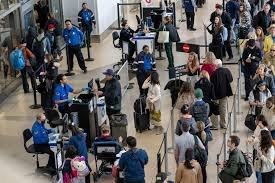
While travelers at many US airports face lengthy security lines due to the recent government shutdown and TSA staff shortages, a surprising solution is quietly proving its effectiveness: private security screening. At 20 airports across the United States, security isn’t handled by the Transportation Security Administration (TSA), but by private companies – and these checkpoints are notably avoiding the long lines plaguing others.
The Screening Partnership Program: A Smooth Operation
Airports like San Francisco International, Kansas City International, and Orlando Sanford are among the 17 smaller facilities participating in TSA’s Screening Partnership Program (SPP), which utilizes contractors at security checkpoints. This program has proven remarkably resilient during the current shutdown.
“These 20 airports are completely oblivious to the government shutdown,” explains Sheldon Jacobson, a computer science professor specializing in aviation security analysis. The difference is stark. While airports relying on TSA staff struggle with significant absences, SPP airports maintain operational efficiency.
Shorter Lines and Consistent Pay
VMD Corp., responsible for checkpoints in Kansas City and Orlando Sanford International, proudly highlights their success on social media: “Airport lines got you down? The professional teams at our SPP airports have less than 3 minute lines!” This contrasts sharply with reports from airports like Houston’s George Bush Intercontinental and Hartsfield-Jackson Atlanta International, where wait times have exceeded two hours due to TSA employee absences.
The Impact of Unpaid TSA Workers
TSA employees, currently unpaid due to the congressional stalemate over Department of Homeland Security funding, are experiencing unpredictable wait times. However, this financial strain doesn’t affect screeners working for private companies.
“All operations at the privatized airports are normal because we continue paying our employees during the shutdown,” states Nat Carmack of BOS Security, which screens passengers at Tupelo Regional Airport in Mississippi. “Our employees have never missed a paycheck during any of the government shutdowns.” While covering payroll during the shutdown presents a financial burden, Carmack assures that the company manages expenses until government funding resumes.
Federal Oversight and Standards
It’s important to note that all private airport security operations remain under strict federal oversight and adhere to the same regulations as TSA agents. Private companies have the flexibility to determine staffing levels and compensation, but must maintain the same security standards.
Keith Jeffries, former TSA federal security director at Los Angeles International Airport and current VP of K2 Security Screening Group, emphasizes that airports always have the option to utilize private screening. “What happens at the checkpoint stays the same, no matter who is operating it,” he explains. Private security screeners receive equivalent training to their TSA counterparts.
Transitioning to Private Security: A Complex Process
Airports facing TSA staffing issues can’t instantly switch to private security. The process requires TSA approval, followed by a contract issuance that can take up to a year, with the company taking over operations within six months, according to BOS Security. This lengthy transition may deter larger airports from opting in, particularly those currently functioning adequately.
Arguments for and Against Privatization
BOS Security points to studies suggesting private contractors excel at contraband detection, offer cost-effectiveness, and boast higher employee satisfaction. However, the American Federation of Government Employees (AFGE), representing TSA screeners, argues that contracts, often awarded based on the lowest bid, compromise public safety, prioritize profit over passengers and employees, and contribute to staff shortages. They also remind us that prior to 9/11, all US airport security was handled by private companies.
A Partnership Model for the Future?
Jacobson views privatizing more of airport security as a “partnership,” drawing parallels to NAV CANADA, which successfully operates Canada’s air traffic control system since its privatization in 1996. “You don’t set the standards in the private sector,” Jacobson explains. “You deliver the final product… in the private sector.”
Source: CNN