
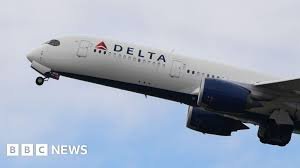
Delta Airlines Flight Hit by Turbulence, Raising Safety Concerns
Several individuals were injured after a Delta Airlines flight from Los Angeles to Sydney encountered unexpected turbulence on Friday morning. The incident, involving Delta Flight 41, occurred as the Airbus A350 was landing at Sydney Airport.
What Happened on Delta Flight 41?
According to a Delta spokesperson, the flight “encountered brief turbulence” during its final approach. While passengers were thankfully unharmed, four flight attendants sustained injuries. The New South Wales Ambulance Service assessed five patients in total, transporting three to the hospital with minor injuries including back pain and headaches. The injured ranged in age from their 30s to 70s.
The aircraft, carrying 245 passengers and 15 crew members, landed safely and normally at 06:48 local time on Friday (19:48 GMT on Thursday). Emergency services were positioned on the tarmac, having received a call just three minutes before landing.
A Pattern of Turbulence Incidents
This incident is the latest in a concerning trend of turbulence-related events. Last year, another Delta Airlines flight from Salt Lake City to Amsterdam experienced “significant” turbulence, forcing an emergency landing and injuring 25 people. More recently, in 2024, a Singapore Airlines flight endured a terrifying five seconds of severe turbulence, tragically resulting in one fatality and dozens of injuries. You can read more about the Singapore Airlines incident here.
The Role of Climate Change in Increasing Turbulence
While turbulence is a common occurrence during air travel, experts are increasingly linking a rise in severe turbulence events to climate change. Shifting atmospheric conditions, including temperature changes and altered wind patterns in the upper atmosphere, are expected to increase both the frequency and intensity of these disturbances.
According to estimates, there are approximately 5,000 incidents of severe-or-greater turbulence annually, out of over 35 million flights globally. Severe turbulence is defined as movements exceeding 1.5g-force, capable of lifting unbuckled passengers from their seats.
Staying Safe: What You Can Do
- Always wear your seatbelt: Even when the seatbelt sign is off, keeping your seatbelt fastened is the single most effective way to protect yourself during unexpected turbulence.
- Pay attention to crew instructions: Flight attendants are trained to recognize and respond to turbulence.
- Secure loose items: Stow carry-on luggage securely and ensure tray tables are in the upright and locked position.
As air travel continues to evolve, understanding the risks and taking proactive safety measures is crucial for a smooth and secure journey. The aviation industry is continually working to improve forecasting and mitigation strategies for turbulence, but passenger awareness remains paramount.
Copyright 2026 BBC. All rights reserved. The BBC is not responsible for the content of external sites.



