
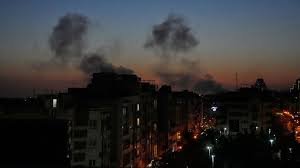
Israel Strikes Iranian Vessels in the Caspian Sea: Escalating Regional Tensions
In a significant escalation of the ongoing conflict, Israel reportedly launched an attack targeting vessels belonging to the Iranian navy in the Caspian Sea. This marks the first such strike since the commencement of Operation Roaring Lion. The attack occurred in Bandar Anzali, a crucial port city on the western Caspian Sea, located in Gilan Province, northern Iran.
Strategic Importance of Bandar Anzali
Bandar Anzali isn’t merely a naval base for Iran; it’s a vital hub for maritime trade between Iran and Russia. Since the onset of the Russia-Ukraine war in 2022, the port has also been implicated in arms smuggling activities. This strategic importance makes it a key location in the broader geopolitical landscape. The Caspian Sea, as a whole, is becoming an increasingly important transit route, and control over key ports like Bandar Anzali is paramount.
According to a source familiar with the details, the attack targeted vessels used for these activities. This action underscores Israel’s willingness to project force beyond its traditional areas of operation.
Context: Recent Israeli Actions & Iranian Retaliation
This strike follows a statement by Israeli Defense Minister Israel Katz regarding the elimination of Iranian Intelligence Minister Esmail Khatib. Katz hinted at further “significant surprises” in all arenas, signaling a heightened level of conflict. Over the past 24 hours, Israel has undertaken a series of unprecedented actions within Iran itself, reportedly attacking over 200 targets, including facilities related to ballistic missiles, UAVs, and weapons manufacturing. A central gas facility in Bushehr, southern Iran, was also reportedly targeted.
In response, Iran launched attacks on gas fields in Qatar and Saudi Arabia on Wednesday evening, following evacuation notices issued for the affected areas. Specifically, a facility in Ras Laffan, Qatar – the world’s largest liquefied natural gas export facility – was attacked, as were gas installations near Riyadh, Saudi Arabia. Iranian media also reported attacks on gas facilities in Bahrain and the bridge connecting Bahrain and Saudi Arabia.
Implications for Regional Stability
The attacks in the Caspian Sea and the retaliatory strikes represent a dangerous escalation of tensions in the Middle East. The involvement of multiple actors – Israel, Iran, Russia, Qatar, Saudi Arabia, and Bahrain – raises the risk of a wider regional conflict. The Caspian Sea, previously a relatively stable region, is now becoming a potential flashpoint. Understanding the dynamics of this region is crucial, as highlighted by resources like the Council on Foreign Relations’ analysis of the Caspian Sea.
The situation remains fluid and highly volatile. Further developments are expected as both sides assess the impact of these recent actions.
Source: X (formerly Twitter)



