
TSA Wait Times at Airports: Potential Closures Loom Amid Funding Dispute
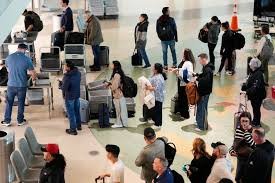
The ongoing stalemate in Washington, D.C. regarding funding for the Department of Homeland Security (DHS) is causing significant disruptions at airports nationwide, with travelers facing increasingly long security lines. Now, the Transportation Security Administration (TSA) is warning that some airports could be forced to close altogether.
Potential Airport Closures on the Horizon
“It’s not hyperbole to suggest that we may have to quite literally shut down airports, particularly smaller ones, if call-out rates go up,” stated Adam Stahl, TSA’s acting deputy administrator, on Tuesday. While the TSA doesn’t have the unilateral authority to close airports, the inability to screen passengers and crews effectively grounds flights.
“We make these determinations on an airport-by-airport basis,” Stahl explained to CNN. “As the weeks continue, our TSA officers, without pay, may be unable to afford commuting costs or childcare, leading to continued absences and potential resignations.”
The Impact of the DHS Funding Lapse
This situation is a direct consequence of the month-long lapse in DHS funding, stemming from a deadlock over immigration reform. TSA workers are not receiving paychecks during the shutdown, and union leaders report that some employees have already quit, while many others are taking unscheduled time off due to financial hardship.
Recent data shows significant staffing shortages. For example, over a third of TSA staff at Hartsfield-Jackson Atlanta International Airport were absent on Wednesday, and more than half at Houston’s Hobby Airport didn’t report for duty last Friday. However, major hubs with high passenger volume are less likely to face closure due to prioritization.
Prioritizing Airports and Staffing Levels
John Pistole, former TSA administrator under the Obama administration, emphasized the importance of prioritizing airports based on passenger loads. “If I were still the administrator, I would be analyzing daily and weekly passenger numbers alongside staffing levels,” he said. Decisions would be made based on the relative busyness of each airport.
So far, the TSA has not halted screening at any airport, and experts believe they will explore all other options before resorting to closures. However, the situation remains precarious.
Current Disruptions and Mitigation Efforts
At Philadelphia International Airport, three of seven checkpoints were closed on Wednesday “to help optimize operations,” potentially leading to longer walks to accessible gates. The TSA’s National Deployment Force, which typically provides support to understaffed airports, has been fully depleted.
In extreme scenarios, larger airports might reallocate officers from smaller, nearby airports to maintain screening operations at major terminals, according to Keith Jeffries, former federal security director at Los Angeles International Airport. This would inevitably lead to increased wait times at the smaller facilities.
Wait Times and Security Concerns
Even if airports remain open with reduced staffing, passengers should expect significantly longer wait times. Furthermore, limited staff could pose challenges with screening procedures, such as pat-downs, if there aren’t enough officers of a particular gender available.
Industry Outlook and a Call for Action
While airport operators don’t anticipate widespread closures, a source familiar with airport operations told CNN that longer wait times are likely. Security standards will not be compromised. Ultimately, the warnings about potential airport closures are intended to underscore the severity of the situation to both travelers and Congress.
“The reality of the situation is this is going to get worse before it gets better, if we don’t see any sort of action,” Stahl cautioned.
Source: CNN



