Chasing the Aurora: A Northern Lights Forecast for New England
There’s an undeniable magic to the idea of gazing upwards and witnessing the sky ablaze with green, pink, or even purple hues. And for skygazers in New England, Wednesday night presents a promising opportunity to witness the breathtaking aurora borealis, more commonly known as the northern lights. Catching this spectacle this far south requires a blend of scientific understanding, opportune timing, and a little bit of luck.
What Exactly *Are* the Northern Lights?
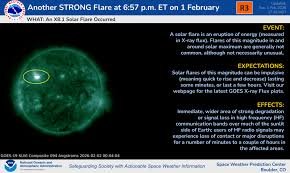
The aurora borealis is a visible manifestation of charged particles from the sun colliding with Earth’s upper atmosphere. The sun continuously emits energy and particles in the form of the solar wind. Occasionally, it releases more powerful bursts. When these particles reach Earth, our planet’s magnetic field directs them towards the polar regions. These collisions with oxygen and nitrogen molecules high in the atmosphere generate light.
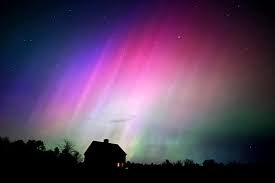
This light can appear in various forms – shimmering curtains, radiant rays, graceful arcs, or a diffuse glow. The most common color is green, produced by excited oxygen atoms. However, depending on altitude and the atmospheric gases involved, reds, purples, and pinks can also appear, creating a truly mesmerizing display. Essentially, the northern lights are Earth’s atmosphere illuminating in response to solar energy.
Viewing the Aurora in New England
For New England, the best chances of witnessing the aurora occur when geomagnetic activity is strong enough to expand the auroral oval further south than usual. Northern New England naturally boasts the highest probability of sightings. However, during particularly strong events, the glow can become visible much further south, especially when viewed away from city lights and with a clear northern horizon.
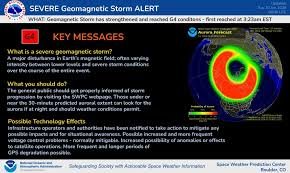
The Space Weather Prediction Center has issued a G2 (moderate) geomagnetic storm watch for Wednesday into Thursday, anticipating the arrival of a coronal mass ejection (CME) that will impact Earth. This increases the likelihood of aurora visibility.
Your Phone Might See More Than Your Eyes!
Interestingly, modern smartphone cameras may actually capture the aurora more vividly than the naked eye. In low-light conditions, our eyes struggle to perceive faint colors, often rendering the aurora as a dim gray or milky glow. However, smartphone cameras, particularly in night mode, can gather more light over several seconds, revealing the subtle greens and pinks that might otherwise go unnoticed.
The Cloud Factor
Of course, clear skies are paramount. Increasing cloud cover is expected across far western and northern New England during the evening. However, outside these areas, a good viewing window should remain open if the aurora materializes. Stay updated with the latest conditions using the free 1DegreeOutside mobile app. You’ll receive push notifications if the northern lights are reported in New England.
Meteorologist Danielle Noyes, co-founder of 1°Outside, provides regular weather analysis and forecasts to WBUR.