
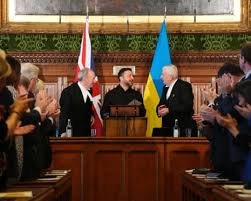
King Charles, Ukraine Aid, and Global Security Updates
Recent developments have highlighted a complex interplay of international relations, ranging from royal engagements to critical discussions on global security. Ukrainian President Volodymyr Zelenskyy addressed MPs and peers, emphasizing the urgent need for continued support and outlining Ukraine’s innovative approach to drone warfare.
Zelenskyy’s Plea for Support and Technological Innovation
Zelenskyy underscored Ukraine’s commitment to defending its values – people, rights, freedom, and culture – and urged European leaders to protect the continent. He powerfully stated, “Europe is a global force – one the world cannot do without and that no one can stand against.” He called for proactive leadership to ensure future generations can live in safety.
During his address, Zelenskyy detailed Ukraine’s expertise in combating drone warfare, a skill honed through years of conflict. He proposed extending this expertise to allies in the Middle East, potentially safeguarding locations like RAF Akrotiri. He highlighted the crucial role of technology, specifically iPads used for coordinating air defenses and monitoring attacks in real-time. A fascinating anecdote emerged from his morning meeting with King Charles, where the King, after receiving an iPad as a gift, playfully inquired if Zelenskyy had another one to share with Keir Starmer.
Geopolitical Tensions and International Responses
Zelenskyy characterized the Iranian regime and Russia as “brothers in hatred,” pointing to their collaboration on Shahed kamikaze drones. He emphasized Ukraine’s willingness to share its technological advancements to counter this threat. Meanwhile, a British counter-drone team operating near Erbil, Iraq, successfully downed over five drones, marking the highest number destroyed by a single unit since the start of the Iran war. RAF pilots are also conducting air patrols over key regions, and the UK’s Space Command is monitoring Iranian missile launches.
Political Developments and Internal Affairs
On the domestic front, Rachel Reeves announced plans to rebalance the English economy through a radical redistribution of national tax revenues to regional leaders. However, controversy has arisen regarding past statements by Nigel Farage, revealed in a Guardian investigation, involving endorsements of extremist events and figures. Furthermore, a leak inquiry has been launched concerning information shared with the Spectator’s political editor regarding the Iran war, raising questions about national security protocols.
Trump’s Remarks and Transatlantic Relations
Former US President Donald Trump once again criticized Keir Starmer, reiterating his claim that Starmer is “no Winston Churchill.” Irish Taoiseach Micheál Martin intervened to defend Starmer, emphasizing the importance of the transatlantic relationship and praising Starmer’s efforts to improve Anglo-Irish relations. Martin stated that Starmer is an “earnest, decent person” with whom Trump could build a rapport.
Ukraine’s Future and the Evolving Threat Landscape
Zelenskyy warned of the evolving threat landscape, emphasizing the increasing use of drones and the potential for AI-powered weaponry. He stressed that interceptors alone are insufficient and that a comprehensive system is needed to counter these threats. Ukraine currently requires approximately 1,000 interceptors per day, a rate it is now capable of producing. He also highlighted Ukraine’s success in pushing the Russian fleet into distant bases in the Black Sea, demonstrating a new security reality at sea.
Zelenskyy concluded by suggesting that failing to push back against Putin in 2022 may have led to the current era of “mass drone warfare,” a threat to all of mankind.



