Paralympics: A Complex Games Marked by Controversy and Change
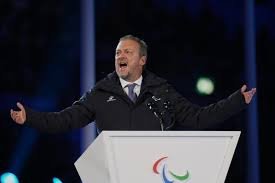
CORTINA D’AMPEZZO, Italy – The recently concluded Milan Cortina Winter Paralympics were not without their share of drama, extending beyond the incredible athletic achievements on display. International Paralympic Committee (IPC) President Andrew Parsons expressed disappointment with complaints lodged by Ukraine’s National Paralympic Committee, suggesting they were an attempt to divert attention from the sporting competition to political issues.
Speaking to the Associated Press on the final day of the Games, Parsons lauded the overall success of the event while addressing key topics such as the return of Russian athletes, the impact of unseasonably warm weather, and the logistical complexities of hosting events across multiple venues.
Ukraine’s Concerns and the IPC’s Response
Parsons acknowledged the Ukrainian National Paralympic Committee’s frustration but emphasized the importance of upholding the rules, even in the face of extraordinary circumstances. He stated, “Yes, I think there was an attempt to always take the focus from sport… I understand, but it is disappointing to some extent.” He further noted that while it’s expected for governments to inject politics into the Games, it was regrettable to see national Paralympic committees doing the same.
Ukraine and several other nations staged a boycott of the opening ceremony – and planned a similar protest for the closing ceremony – in response to the IPC’s decision to allow Russian athletes to compete under their own flag for the first time in over a decade. The Ukrainian Paralympic committee accused the IPC and local organizers of “systematic pressure” on their athletes and coaches, citing incidents such as the alleged removal of a Ukrainian flag, disruption of team meetings, and a ban on an athlete wearing a “Stop War” earring during a medal ceremony.
Both the IPC and local organizers defended their actions, maintaining that the focus should remain on the athletes and the spirit of the Games. Parsons reiterated that the “vast majority” of national Paralympic committees prioritized sport, recognizing its power to promote inclusivity and understanding.
The Return of the Russian Flag
The sight of the Russian flag flying at the Paralympics for the first time since the 2014 Sochi Games, and the playing of the Russian anthem, marked a significant moment. This return has been interpreted by some as a potential stepping stone towards a full reintegration of Russia into the Olympic movement ahead of the 2028 Summer Games in Los Angeles.
Parsons clarified that the decision to lift the suspension was made solely in the best interests of the Paralympic movement, stating, “We don’t think that we are going to initiate processes… It’s for the IOC to make their decisions, it’s for FIFA to make their decisions.”
Addressing Climate Change and Future Games
The impact of warmer weather on the Paralympics also emerged as a key concern. Organizers were forced to adjust event schedules due to high temperatures, with some athletes competing in unusually warm attire. Parsons acknowledged the urgency of addressing climate change, stating, “Unfortunately, global leaders are not responding in the speed that is necessary to slow down the process.” He emphasized the need for ongoing discussions within the IPC and with the International Olympic Committee (IOC) to adapt to these changing conditions.
The Future of Paralympic Venues
Parsons also highlighted the success of the “spread-out” Games model, utilizing existing venues across different clusters to reduce the need for new construction. He believes this approach is “here to stay,” offering a more sustainable and cost-effective way to host the Paralympics. He noted that while it adds operational complexity, the benefits outweigh the challenges.
Learn more about the Paralympics at AP News.