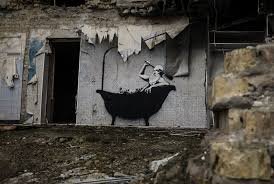
Banksy: The Enigmatic Artist Revolutionizing the Art World
Banksy. The name alone conjures images of stencils, subversive commentary, and a relentless anonymity. But who *is* Banksy? This question has fueled speculation for decades, adding to the mystique of the artist who has arguably become the most famous – and elusive – in the world. More than just a graffiti artist, Banksy is a cultural phenomenon, a political activist, and a master of challenging the status quo through art.
The Rise of a Street Art Icon
Emerging from the Bristol, England street art scene in the 1990s, Banksy quickly distinguished himself with a unique style – a blend of stenciling and freehand spray paint. Initially, his work was part of the vibrant underground culture, but it soon began to attract wider attention. His early pieces often featured anti-war and anti-establishment themes, reflecting the political climate of the time. The use of stencils allowed for rapid execution, crucial for illegal street art, and contributed to the distinctive, instantly recognizable aesthetic.
Provocative Art & Political Commentary
Banksy’s art isn’t simply about aesthetics; it’s a powerful form of social and political commentary. His works frequently address issues like consumerism, hypocrisy, war, and inequality. Iconic pieces like ‘Girl with Balloon’ and ‘Rage, Flower Thrower’ have become symbols of hope and resistance. The artist’s willingness to tackle controversial subjects, often with a dark sense of humour, has made his work both celebrated and criticized. He doesn’t shy away from challenging authority and prompting viewers to question the world around them.
The Dismaland Experience & Beyond
In 2015, Banksy took his activism to a new level with ‘Dismaland,’ a dystopian theme park in Weston-super-Mare, England. Described as a “bemusement park,” Dismaland was a satirical take on Disneyland, offering a bleak and unsettling commentary on modern society. The exhibit drew massive crowds and generated significant media attention, further solidifying Banksy’s reputation as a cultural disruptor. Since Dismaland, Banksy has continued to surprise and provoke with pop-up installations and unexpected interventions, like shredding his own painting after it was sold at auction in 2018 – a stunt that sent shockwaves through the art world. The Guardian covered the event extensively.
The Mystery Continues: Why the Anonymity?
Perhaps the most intriguing aspect of Banksy is his unwavering anonymity. Despite decades in the public eye, his true identity remains unknown. There are numerous theories, but none have been definitively proven. The anonymity allows the art to speak for itself, free from the biases and preconceptions that might come with knowing the artist’s personal background. It also protects him from legal repercussions, given the often-illegal nature of his work. The mystery is, in many ways, integral to the Banksy brand and contributes to his enduring appeal. Smithsonian Magazine explores the ongoing search for Banksy’s identity.
The Legacy of Banksy
Banksy’s impact on the art world is undeniable. He has democratized art, bringing it out of galleries and into the streets, making it accessible to a wider audience. He has inspired countless artists and activists, and his work continues to spark debate and challenge conventions. Whether you view him as a vandal, a genius, or a provocateur, Banksy has left an indelible mark on contemporary culture. His work continues to be highly sought after, with pieces fetching millions of dollars at auction, proving that even anonymous art can have immense value.