Bus-Sized Asteroid 2026 EG1 to Buzz Earth This Week
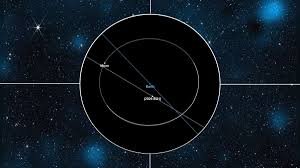
A newly discovered asteroid, designated 2026 EG1, is set to make a remarkably close approach to Earth late on March 12th. This space rock, estimated to be roughly the size of a bus, will pass closer to our planet than the moon, silently zipping beneath Antarctica. Fortunately, NASA confirms it poses absolutely no risk to Earth or its natural satellite.
Close Encounter Details
The asteroid will reach its closest point at 11:27 p.m. EDT on March 12th (0327 GMT on March 13th), coming within approximately 197,466 miles (317,791 kilometers) of the southern hemisphere. At this incredible speed of 21,513 miles per hour (34,621 kilometers per hour), 2026 EG1 will swiftly fly by after a distant encounter with the moon.
Orbital Path and Future Approaches
Initial observations reveal that 2026 EG1 follows a 655-day elliptical orbit around the sun. This orbit takes it from within Earth’s orbital path to well beyond the orbit of Mars. While this close approach is noteworthy, the asteroid won’t be back for a while. Its next closest planetary approach isn’t predicted until September 13, 2186, when it will pass approximately 7.5 million miles (12.1 million km) from Mars.
Tracking Near-Earth Objects
This wandering asteroid is just one of over 41,000 near-Earth asteroids currently being tracked by NASA and its partners. This number is expected to grow significantly thanks to the Vera Rubin Observatory, which has already identified 2,000 previously unknown solar system bodies with its initial data.
No Immediate Threat, But Preparedness is Key
Despite the large number of tracked asteroids, NASA’s Center for Near Earth Object Studies (CNEOS) has determined that no major asteroid impacts capable of causing significant damage are anticipated in the next 100 years. However, NASA and its collaborators are proactively working on planetary defense strategies. This includes conducting mock scenarios to improve global communication and response protocols, as well as developing asteroid redirection missions.
Stay Updated on Space News
Keep up with the latest space discoveries, rocket launches, and skywatching events with Space.com! Explore the universe and learn more about the fascinating world beyond our planet.
Source: Space.com