
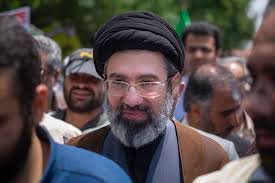
Mojtaba Khamenei: The Rise of Iran’s New Supreme Leader and What It Means
When millions of Iranians took to the streets in 1979, hoping to dismantle the Pahlavi dynasty, the revolution seemed to promise an end to hereditary power. However, recent events suggest a different trajectory. Mojtaba Khamenei, the second son of the late Supreme Leader Ali Khamenei, has been positioned to inherit the mantle his father held for nearly four decades.
A Dynasty Emerges?
This succession has sparked controversy, with many Iranians fearing the transformation of the Islamic Republic into a dynasty. The 88-member Assembly of Experts’ decision to elevate Mojtaba has been met with both internal dissent and external criticism. US President Donald Trump previously stated that Mojtaba’s appointment would be “unacceptable.”
Who is Mojtaba Khamenei?
Born in 1969, Mojtaba Khamenei received religious training, though he never achieved the rank of Mujtahid – a level of Islamic jurisprudence considered essential by many within the regime. He is married to Zahra, the daughter of Gholam Haddad Adel, a former speaker of parliament and close confidant of his father. For years, Mojtaba operated largely behind the scenes, quietly building influence within the complex network of his father’s system.
A Shadowy Influence
Despite maintaining a low public profile, Mojtaba cultivated strong ties with the Islamic Revolutionary Guard Corps (IRGC) and the economic entities that underpin the regime. His influence was palpable, even without holding a formal senior position. In recent years, he was increasingly presented as a potential successor, with supporters openly promoting him as the next leader through posters in Tehran as early as 2021.
Political Maneuvering and the 2009 Uprising
Many observers believe Mojtaba played a key role in the 2005 presidential election, mobilizing IRGC networks to support Mahmoud Ahmadinejad against the more established Akbar Hashemi Rafsanjani, a rival of his father. The 2009 presidential election and the subsequent protests further highlighted Mojtaba’s political acumen. When millions protested the re-election of Ahmadinejad, alleging fraud, Mojtaba was seen as a key figure in the brutal crackdown that followed, effectively ending any meaningful domestic reform movement. Protesters even chanted slogans against him, expressing their fear of his potential leadership.
US Sanctions and Regional Ambitions
In 2019, the US Treasury Department sanctioned Mojtaba, accusing him of collaborating with the commander of the IRGC to advance his father’s “destabilizing regional ambitions and oppressive domestic objectives.” This underscores the US government’s view of his significant role within the Iranian power structure.
Implications for Iran’s Future
The elevation of Mojtaba Khamenei signals a continuation of the existing hardline policies. As Maha Yahya, director of the Carnegie Middle East Center, noted, the appointment suggests the regime intends to double down on Ali Khamenei’s legacy, even in the face of external pressure. Mojtaba lacks significant administrative experience, having never led a major organization, and has offered little public insight into his vision for addressing the country’s numerous challenges.
His worldview is deeply rooted in the ideology of his father, suggesting a continuation of the status quo. The appointment can also be interpreted as a defiant message to the US and Israel, indicating that military pressure will not force a change in Iran’s position.
Source: CNN



