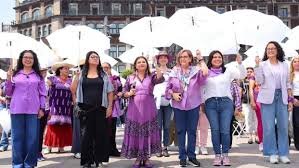
International Women’s Day: A Global Celebration of Strength and Resilience
International Women’s Day, observed annually on March 8th, is more than just a date on the calendar. It’s a powerful global day celebrating the social, economic, cultural, and political achievements of women. It’s a call to action for accelerating gender parity and a moment to reflect on the progress made, while acknowledging the significant challenges that still lie ahead.
A History Rooted in Activism
The origins of International Women’s Day date back to the early 20th century, a period of significant upheaval and activism. In 1908, 15,000 women marched in New York City demanding shorter working hours, better pay, and the right to vote. This sparked a wave of similar movements across Europe. The first International Women’s Day was celebrated in 1911, proposed by Clara Zetkin, a German socialist, at the Second International Conference of Working Women in Copenhagen. It wasn’t until 1975 that the United Nations officially recognized March 8th as International Women’s Day.
The Significance of 2024’s Theme: #InspireInclusion
Each year, International Women’s Day adopts a theme to focus global efforts. The theme for 2024 is #InspireInclusion. This theme emphasizes the crucial role of inclusion in achieving true gender equality. It’s a reminder that a diverse and inclusive world is a better world for everyone. Inspire Inclusion calls for action to break down barriers and create opportunities for women of all backgrounds and abilities. It’s about recognizing that inclusion isn’t just about representation, but about valuing and celebrating the unique contributions of every woman.
Celebrating Women’s Achievements Across Fields
Throughout history, women have made groundbreaking contributions in every field imaginable. From Marie Curie’s pioneering work in radioactivity to Rosa Parks’ courageous stand against segregation, women have consistently challenged the status quo and paved the way for progress. Today, women are leading in science, technology, engineering, mathematics (STEM), business, politics, arts, and countless other areas. Consider figures like Kamala Harris, the first female Vice President of the United States, and Malala Yousafzai, the youngest Nobel Prize laureate, who advocates for girls’ education.
Challenges Remain: The Fight for Equality Continues
Despite significant progress, gender inequality persists globally. Women continue to face discrimination in the workplace, unequal pay, limited access to education and healthcare, and disproportionate representation in leadership positions. Gender-based violence remains a pervasive issue, affecting millions of women and girls worldwide. According to
UN Women, achieving gender equality is not only a fundamental human right but also essential for building a sustainable and peaceful world.
How You Can Support International Women’s Day
- **Educate Yourself:** Learn about the history of the women’s rights movement and the challenges women still face today.
- **Support Women-Owned Businesses:** Invest in businesses led by women and contribute to their economic empowerment.
- **Advocate for Equal Pay:** Speak out against pay gaps and support policies that promote equal pay for equal work.
- **Challenge Gender Stereotypes:** Question and challenge traditional gender roles and expectations.
- **Donate to Women’s Organizations:** Support organizations working to advance women’s rights and empower women globally. Consider organizations like Planned Parenthood or Heifer International.
International Women’s Day is a reminder that the fight for gender equality is far from over. By celebrating the achievements of women and working together to address the challenges they face, we can create a more just and equitable world for all.