Toto Wolff and Mercedes’ Dominance in F1 2026: A Deep Dive
Qualifying for the 2026 Australian Grand Prix emphatically proved the Mercedes W17 is a force to be reckoned with. However, it also highlighted that F1 2026 demands a new approach, a “new language and a new way of thinking,” as McLaren team principal Andrea Stella aptly put it. Understanding this shift is crucial to deciphering Mercedes’ significant advantage.
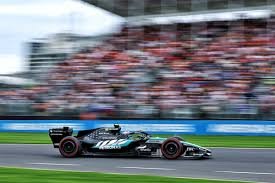
After securing his eighth Formula 1 pole position with a lap a staggering 0.785s faster than the closest non-Mercedes car – Isack Hadjar’s Red Bull – George Russell emphasized that the margin isn’t solely down to the power unit, but also the exceptional quality of the chassis. “We’ve got a really great engine beneath us,” Russell stated. “However, we’ve also got a really amazing car beneath us, and that probably hasn’t been highlighted enough in the press these past few weeks. The car felt great to drive from the outset, as both Kimi [Antonelli] and I experienced.”
Beyond the Power Unit: Chassis and Deployment
While Russell’s statement is insightful, a closer look reveals the advantage isn’t just the power unit. His 0.862s advantage over Oscar Piastri’s McLaren-Mercedes suggests a superior chassis is at play. Data indicates Russell’s minimum speed through most turns was slightly higher than the McLarens, but this is overshadowed by Mercedes’ superior energy deployment.
This deployment advantage is most evident on the straights. Analyzing Russell’s lap compared to the fastest cars from Red Bull, Ferrari, and McLaren reveals a significant difference. At the exit of Turn 8, all four drivers were at full throttle, traveling at similar speeds (Russell and Leclerc at 290km/h, Hadjar at 289km/h, and Piastri at 291km/h). However, Russell was already ahead, with Leclerc trailing by 0.225s, Piastri by 0.252s, and Hadjar by 0.332s.
As they accelerated down the back straight, the speed traces diverged further. While Leclerc and Piastri’s speeds leveled off, Russell maintained a gap over Hadjar. Even as all cars began to decelerate for the super clip, Mercedes did so from a higher peak speed, leveling off later. Between the exit of Turn 8 and Turn 9, Leclerc lost another 0.234s, Hadjar 0.222s, and Piastri a substantial 0.449s. A similar pattern emerged on the run out of Turn 10.
Over the distance from Turn 8 to Turn 11 (approximately 25 seconds), Leclerc lost 0.650s, Hadjar 0.722s, and Piastri 0.628s. This represents roughly 32% of the lap time, accounting for 80% of Leclerc’s loss, 92% of Hadjar’s, and 73% of Piastri’s. The latter figure is particularly striking, considering Mercedes and McLaren share the same power unit.
The Integration Advantage
“I don’t know what the Mercedes lap looks like, but we were lifting and coasting three times a lap,” said Piastri. “We had two super clips through the lap. And in some corners we’ve got effectively 450 horsepower less.”
The regulations stipulate identical power unit specifications and modes for works teams and customers, eliminating a direct advantage for Mercedes in that area. The edge lies in integration and, crucially, preparation. Works teams have consistently demonstrated an advantage in this regard since testing began, but even McLaren was surprised by the magnitude of their deficit on the straights.
“It took qualifying, to be all in the same condition on track, same power unit, to have enough of a reference to understand what is possible,” explained Stella. “From this point of view, being a customer team doesn’t put you on the front foot. This doesn’t have to do with the hardware, this has more to do with learning about the hardware and identifying the best way to exploit it. We are certainly entering a new era of Formula 1 in which these factors become essential in terms of sensitivity to driver’s input, the way you use your energy in the preceding straight to have the maximum deployment in the following straight, especially if it’s a long straight. All these factors become essential.”
This new era demands a nuanced understanding of energy strategy, impacting pace significantly. Examining the run to Turn 6 reveals a potential difference in state of charge for Mercedes. Russell’s speed leveled off before Piastri, giving the McLaren a small gain. However, even small differences in battery level can have a significant impact, given the 350kW boost from the MGU-K.
Stella also noted Mercedes’ cornering speed: “It is true as well that Mercedes are quick in the corners, not only in the straights. There’s a few corners in which we can compete with them, but overall they are faster in the grip-limited sections. Mercedes are doing a better job than us at exploiting the power unit, but they have also done a better job than us in terms of overall grip in the corners. I guess in particular, this will have to do with the level of downforce.”
Looking Ahead
Ferrari, hampered by their smaller turbo at a track lacking slow corners, had to be more conservative with deployment but excelled on braking. Red Bull showed strength in high-speed corners but couldn’t match Mercedes’ deployment. However, energy management currently dominates the competitive landscape, a factor that should diminish over time, allowing underlying car characteristics to become more apparent.
Mercedes has demonstrated a strong car, a superior power unit, and, most importantly, a masterful understanding of how to extract maximum performance from that power unit. This success should translate into a victory on Sunday, based on the long runs from earlier in the weekend. How long this dominance will last, particularly against a team like McLaren with the same engine, remains to be seen.
Source: The Race