
Israel-Iran Conflict: A Deep Dive into the Escalating Tensions
The conflict between Israel and Iran has entered its second week, with Israel vowing to continue its military operations “with all its force.” Prime Minister Benjamin Netanyahu stated on Saturday that Israel is deploying a “methodical plan” to “eradicate the regime,” while Tehran insists it will not capitulate. The situation remains highly volatile, with repercussions felt across the region and beyond.
Recent Developments and Attacks
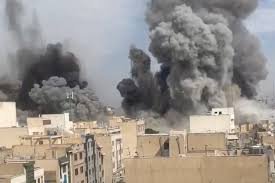
Explosions have rocked the region throughout the day, from Israel to Iran, and even impacting Iraq and the Gulf states, where Iran launched waves of missile and drone attacks against neighboring countries hosting U.S. forces. Israeli strikes on Iran on Saturday were among the most massive since the conflict began on February 28th, targeting a military academy, an underground command center, and a missile storage site.
Netanyahu asserted, “We have a methodical plan, with many surprises, to eradicate the regime and enable change.” The Israeli military claims to have conducted “3400” strikes in a week, with the U.S. military reporting “3000” strikes, allegedly including the killing of Iran’s supreme guide, Ali Khamenei, on the first day of the conflict.
Reports from the Associated Press showed flames and smoke rising from Tehran’s Mehrabad International Airport, one of the capital’s two airports, where the Israeli military claims to have struck 16 aircraft belonging to the elite Revolutionary Guard unit.
International Response and Concerns
The United States and Israel are seeking the “disintegration” of Iran, according to Ali Larijani of Iran’s Supreme National Security Council. Early in the war, Donald Trump called on the Iranian people to overthrow the Islamic Republic, established in 1979. While Washington aims to dismantle Iran’s ballistic capabilities and prevent it from acquiring a nuclear weapon – a claim Tehran denies – the overall objective remains a point of contention.
On the ground in Tehran, residents report the establishment of checkpoints, with shops remaining open but prices increasing. Iranian authorities claim approximately 1,000 people have been killed since the start of the war, 30% of whom are children, though these claims remain unverified by independent sources.
Escalation and Regional Impact
Iran is retaliating by targeting Israel and Gulf countries hosting U.S. bases and interests. President Massoud Pezeshkian, a member of the triumvirate overseeing the transition following Ali Khamenei’s death, affirmed that Iran will not surrender, responding to Donald Trump’s demand for “unconditional surrender.”
Accusations are flying, with Iranian officials claiming attacks on Bahrain’s Juffair American base and targeting oil tankers in the Strait of Hormuz. Gulf countries maintain their territories are not being used to launch attacks against Iran. Several countries in the region have experienced alerts, and a Pakistani driver was killed in Dubai by debris from an intercepted projectile.
The conflict has even extended to Cyprus, where a British airbase was reportedly struck by an Iranian-made drone. U.S. forces have begun utilizing British bases for “defensive operations,” with B-1 bombers from the U.S. Air Force landing at RAF Fairford in southwest England.
Concerns are growing about the potential for the conflict to spread to the Caucasus, following drone attacks by Iran against Azerbaijan, an ally of Israel. The situation in Iraq is also deteriorating, with rockets intercepted over the U.S. embassy in Baghdad and explosions reported in Iraqi Kurdistan, where Iranian Kurdish exile factions are based.
Humanitarian Crisis and Displacement
A “humanitarian disaster” is looming in Lebanon, according to Prime Minister Nawaf Salam, with mass displacement from areas bombarded by the Israeli army, including the southern suburbs of Beirut, a stronghold of the pro-Iranian Hezbollah movement. Over 450,000 people have fled, and 300 have been killed, according to Lebanese authorities, since the country was drawn into the conflict on Monday when Hezbollah attacked Israel to “avenge” the death of Ayatollah Khamenei.
Looking Ahead
The situation remains fluid and unpredictable. While some in Israel predict the operation will be studied in military schools worldwide, the conflict’s long-term consequences are uncertain. The involvement of multiple actors, including Russia (reportedly providing intelligence to Iran) and China (a major buyer of Iranian oil), adds further complexity. The need for de-escalation and a diplomatic solution is becoming increasingly urgent.
Sources:



