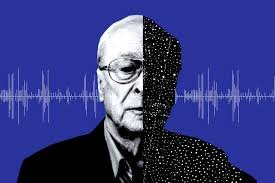
The Enduring Appeal of Michael Caine’s Voice: A Cultural Icon in the Age of AI
Few actors possess a voice as instantly recognizable – and frequently imitated – as Michael Caine. Even Caine himself has playfully parodied his own distinctive delivery. It’s become synonymous with a particular brand of Britishness, a sound that resonates deeply within popular culture. Recently, artificial intelligence company ElevenLabs announced that Caine has licensed his voice for use on their ElevenReader app and Iconic Marketplace, sparking a conversation about the value and implications of replicating such an iconic sound.
The Roots of a Recognizable Accent
But what exactly makes Michael Caine’s voice so iconic, and why is it so sought after by AI developers? To understand this, we need to delve into its origins. Born in London in 1933, Caine’s upbringing was steeped in the sounds of the city’s working class. His mother worked as a cook and cleaner, and his father in a fish market. He speaks with a distinct Cockney accent, a characteristic that set him apart from many of his contemporaries.
Cockney originates from London’s East End and is historically associated with the city’s working class – think of characters like Eliza Doolittle from My Fair Lady, the Artful Dodger from Oliver!, or Bert the Chimney Sweep from Mary Poppins (though Dick van Dyke’s attempt is famously imperfect). Traditionally, a true Cockney was said to be born within earshot of the Bow Bells – the bells of St. Mary-le-Bow church on Cheapside.
A Conscious Choice: Preserving Authenticity
This distinctiveness wasn’t accidental. In mid-20th century Britain, the Cockney accent carried significant class connotations. While many actors of his generation adopted a “stage accent” – known as Received Pronunciation (RP) – Caine made a deliberate choice to retain his working-class roots. As he famously stated, he felt he could “fight the class system in England” by refusing to alter his natural way of speaking.
This decision proved pivotal to his career, helping him secure roles in iconic films like Alfie (1966), The Italian Job (1969), and Get Carter (1971). By the 1970s, Michael Caine had become a true British cultural icon.
Beyond Acoustics: The Social Meaning of Voice
Hearing a voice isn’t simply about processing sound; it’s about interpreting social meaning – culture, identity, character, and story. Sociolinguist Asif Agha coined the term “enregisterment” to describe how a particular way of speaking becomes publicly recognized as signaling specific social types and values. Over time, Caine’s voice has become enregistered as a recognizable Cockney accent, historically linked to a working-class identity.
This contrasts sharply with accents like that of Queen Elizabeth II, which were enregistered with royalty, prestige, and wealth. Furthermore, Caine’s voice carries “dialectal memes” – the images and character types that circulate around particular accents, transmitted through film, television, and celebrity figures.
AI Licensing: Commodifying Cultural Capital
Therefore, AI voice licensing isn’t just about replicating the acoustic properties of Caine’s voice; it’s about commodifying the enregistered social meanings audiences recognize within it. ElevenLabs positions its Iconic Marketplace as a “performer-first approach” to the entertainment industry, allowing actors to maintain ownership of their voices in the digital age. Licensing theoretically ensures Caine receives credit and compensation, and prevents unauthorized clones from appearing elsewhere.
This model could represent a positive step for actors, granting them control over the use of their voice with clear credit and payment. However, it’s not without potential risks. We must consider whether there’s a genuine need to hear content delivered in Caine’s voice, and whether information will be processed differently or with more authority simply because of the speaker.
The Ethical Considerations of AI Voice Replication
The potential for attachment and even infatuation with an AI voice tied to a real human raises ethical concerns. Computer scientist Joseph Weizenbaum, creator of the first chatbot Eliza, warned about the dangers of forming relationships with machines decades ago, observing how users confided in the chatbot even when aware of its limitations.
Caine is licensing not just his voice, but also the Cockney persona audiences recognize within it. This imbues a machine with the authority of a real human, blurring the lines between authenticity and simulation. As AI technology continues to evolve, careful consideration of these implications is crucial.
Further Reading: The Guardian – Michael Caine clones his voice with AI to prevent misuse