
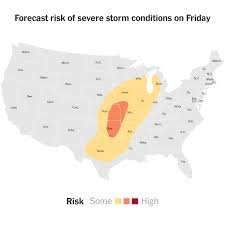
A significant severe weather outbreak is forecast to impact a large portion of the United States, prompting warnings from the National Weather Service. This isn’t just a typical spring storm; meteorologists are describing a potentially dangerous situation with the risk of multiple hazards, including tornadoes, large hail, damaging winds, and flash flooding.
Understanding the Threat: What is a Severe Weather Outbreak?
A severe weather outbreak is defined as a series of severe thunderstorms occurring over a relatively wide area. These events are often associated with large-scale weather systems, like powerful jet streams and colliding air masses. The current system is fueled by unusually warm and moist air surging northward from the Gulf of Mexico, colliding with a strong cold front moving eastward. This creates an incredibly unstable atmosphere, ripe for the development of supercell thunderstorms – the type most likely to produce tornadoes.
Key Hazards to Watch For
- Tornadoes: The most immediate and life-threatening hazard. Pay close attention to tornado watches and warnings issued by the National Weather Service.
- Large Hail: Hailstones the size of golf balls or even baseballs can cause significant damage to property and injure people.
- Damaging Winds: Straight-line winds exceeding 70 mph can topple trees, down power lines, and cause structural damage.
- Flash Flooding: Heavy rainfall can quickly overwhelm drainage systems, leading to dangerous flash floods, especially in low-lying areas.
The Storm Prediction Center (https://www.spc.noaa.gov/) is actively monitoring the situation and issuing forecasts and outlooks. Their website provides detailed information about the areas at risk and the potential for severe weather.
Staying Safe During a Severe Weather Outbreak
Preparation is key to staying safe during a severe weather outbreak. Here are some essential steps you can take:
- Have a Plan: Develop a family emergency plan that includes a designated safe room, communication strategies, and evacuation routes.
- Stay Informed: Monitor weather updates from reliable sources like the National Weather Service, local news, and weather apps.
- Know the Difference: Understand the difference between a watch (conditions are favorable for severe weather) and a warning (severe weather is happening or imminent).
- Seek Shelter: If a tornado warning is issued, immediately seek shelter in a basement, storm cellar, or interior room on the lowest floor of a sturdy building.
- Protect Yourself from Hail and Wind: During a thunderstorm, stay indoors and away from windows.
- Avoid Floodwaters: Never drive or walk through floodwaters. “Turn around, don’t drown!”
The National Weather Service offers comprehensive safety information on their website: https://www.weather.gov/safety. Remember, being prepared and staying informed can significantly reduce your risk during a severe weather outbreak.



