
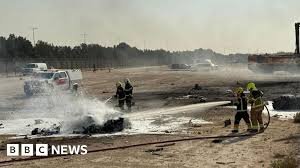
Fatal Tejas Fighter Jet Crash at Dubai Airshow Claims Pilot’s Life
A somber cloud descended upon the final day of the prestigious Dubai Airshow as an Indian Tejas fighter jet tragically crashed during a display, resulting in the immediate death of its pilot. The incident, which occurred at approximately 14:10 local time (10:10 GMT) at Al Maktoum International Airport, has prompted a thorough investigation by Indian authorities.
Details of the Tragic Incident
Eyewitnesses and initial reports indicate the single-engine Tejas aircraft, a domestically developed fighter jet by Hindustan Aeronautics Ltd (HAL), went down during its aerobatic display. Video footage circulating in the aftermath showed plumes of black smoke rising from the crash site, signaling the severity of the impact. Emergency services and firefighters from Dubai’s Media Office and the UAE Ministry of Defence responded rapidly to manage the situation on-site, containing the incident.
Indian Air Force Expresses Profound Regret
The Indian Air Force (IAF) issued a statement expressing profound sorrow over the loss. “IAF deeply regrets the loss of life and stands firmly with the bereaved family in this time of grief,” the statement read. A formal Court of Inquiry is being constituted to ascertain the precise cause of the accident, a standard procedure following such grave incidents.
General Anil Chauhan, India’s Chief of Defence Staff, echoed these sentiments, conveying deep regret on behalf of all ranks of the Indian Army and reaffirming solidarity with the pilot’s family during this difficult time.
The Dubai Airshow Context
The Dubai Airshow 2025, a biennial event renowned as one of the world’s leading aerospace exhibitions, had attracted over 148,000 attendees and exhibitors from 1,500 companies. The Tejas jet’s presence at such a high-profile international event was significant, showcasing India’s indigenous aerospace capabilities. The fatal crash cast a pall over what was otherwise a successful gathering of global aviation and defense industries.
Aviation safety is paramount, especially at public events like airshows. Incidents like the Tejas fighter jet crashes underscore the inherent risks involved in high-performance aerial displays and the constant need for vigilance and adherence to stringent safety protocols.
What Happens Next?
The focus now shifts to the ongoing investigation. The Court of Inquiry will meticulously examine all factors surrounding the Tejas crash, including technical malfunctions, human error, environmental conditions, and operational procedures. The findings will be crucial not only for understanding this specific incident but also for enhancing future aviation safety measures, particularly concerning display flights.
The global aviation community, along with defense enthusiasts, awaits the results of this critical investigation into the Tejas fighter jet’s performance and the circumstances leading to this tragic event. Our thoughts remain with the family of the fallen pilot and the entire Indian Air Force.



