Washington Capitals Power Play Struggles: A Deep Dive
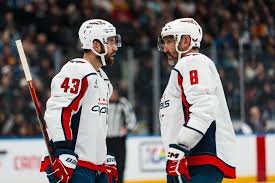
WASHINGTON — Frustration boiled over for Washington Capitals captain Alex Ovechkin after yet another failed power-play attempt against the Vegas Golden Knights on Friday. The visible display of discontent – a broken stick and a few kicks at the boards – mirrored the team’s overall struggles with the man advantage. Ovechkin himself is currently experiencing a seven-game goal drought, and the power play unit went 0-for-5 on Friday, prompting a visibly frustrated response from head coach Spencer Carbery.
A Dismal Power Play Percentage
Carbery was blunt in his post-game assessment, stating he didn’t want to delve into the specifics of the power play’s performance, simply labeling it “not good.” And the numbers back up his assessment. The Capitals have converted on just 29 of 183 power-play opportunities this season, resulting in a mere 15.8% success rate. This ranks as the second-worst in the NHL, ahead of only the Colorado Avalanche (who have played fewer games).
Identifying the Root Causes
So, what’s going wrong? The issues are multifaceted. A significant problem lies in entries and establishing a solid setup. Once in the offensive zone, the Capitals are struggling to execute effectively, allowing opposing teams to easily regain possession and clear the puck. While shot volume isn’t the primary concern – Washington has registered 265 shots and generated 278 scoring chances on the power play – a distinct lack of finishing touch and high-danger opportunities is proving costly.
“I know they’re frustrated. Guys, they want to score in those spots, specially (Dylan Strome), (Alex Ovechkin), (Jakob Chychrun), they want to produce, because they understand that’s an important part of their identity and their roles, is capitalizing on the power play,” Carbery explained. “When they don’t, they get frustrated. I get it.”
Personnel and Chemistry Concerns
Beyond the strategic issues, personnel and chemistry are also playing a role. Ovechkin’s scoring slump is a major concern, and his teammates are having difficulty connecting with him for his signature one-timer. Injuries to key players like Ryan Leonard and Tom Wilson have further disrupted the chemistry of the top power-play unit.
Potential Solutions on the Horizon
There are potential solutions in sight. The return of Pierre-Luc Dubois has injected some much-needed energy and physicality into the lineup, and while currently on the second unit (PP2), he could be a catalyst for the top unit. The absence of John Carlson on the second unit is also being felt. Looking ahead to the 2026 NHL Trade Deadline, the Capitals are reportedly seeking a skilled winger who could provide another offensive spark.
However, the solution may extend beyond simply adding new players. A comprehensive re-evaluation of the power-play system and strategy may be necessary.
The Urgency to Improve
Carbery and the Capitals are acutely aware of the need for improvement. They recognize that the power play’s struggles have already cost them games and cannot afford a repeat performance during their playoff push. “We have to (improve),” Carbery stated. “We’ll continue to work at it, and hopefully, some of those pucks will start to go in for us.”
The Washington Capitals’ success hinges on their ability to unlock their power play potential. The coming weeks will be crucial in determining whether they can address these issues and become a legitimate threat in the Eastern Conference.