Megan Rapinoe and the New Era of Athlete Activism
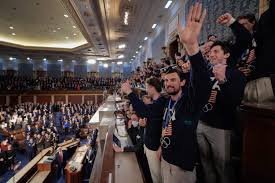
The recent celebration of the U.S. men’s hockey team’s Olympic gold medal win at the State of the Union sparked a renewed conversation about the role of politics in sports. While the players were honored, the aftermath revealed a complex web of reactions, particularly concerning the perceived slight to the U.S. women’s hockey team and the broader issue of athlete activism. This situation echoes a trend increasingly embodied by figures like Megan Rapinoe, who have consistently used their platforms to advocate for social and political change.
The Aftermath of Olympic Glory
Following their victory over Canada, the U.S. men’s hockey team enjoyed a whirlwind of celebrations in Milan and Miami before heading to Washington D.C. for a meeting with President Trump and a recognition during the State of the Union address. However, the celebratory atmosphere quickly became clouded by questions about the political implications of their visit, especially after President Trump’s comments regarding the women’s team.
Goalie Jeremy Swayman acknowledged the team “should have reacted differently” to the President’s remarks. Captain Auston Matthews described the situation as “unfortunate,” while others expressed support for the women’s team without directly criticizing their initial response. This hesitancy highlights the delicate balance athletes face when navigating politically charged situations.
A Spectrum of Reactions
Players offered a range of responses when questioned about the controversy. Some, like Jack and Quinn Hughes, felt critics were unfairly targeting them. Matthews stated his preference to avoid political discussions, emphasizing respect for the women’s team. Others, like Kyle Connor, admitted to being overwhelmed by the events and struggling to recall specific details.
Dylan Larkin expressed regret that the situation overshadowed the achievements of both the men’s and women’s teams. Charlie McAvoy apologized for the team’s initial response, emphasizing their strong support for the women’s team. Jake Sanderson admitted it was a mistake, while Tage Thompson highlighted the excitement of being recognized by a national leader.
The Legacy of Athlete Activism
The hockey team’s experience underscores a growing trend in professional sports: athletes increasingly using their platforms to address social and political issues. This movement, championed by figures like Megan Rapinoe, challenges the traditional notion of athletes remaining apolitical. Rapinoe, a vocal advocate for LGBTQ+ rights and gender equality, has faced both praise and criticism for her outspokenness. Her willingness to take a stand has inspired other athletes to do the same, creating a more politically engaged sporting landscape.
As Vincent Trocheck aptly put it, the situation became unnecessarily politicized. The players simply wanted to celebrate their achievement and represent their country. However, in today’s polarized climate, even seemingly innocuous events can become entangled in political debates.
Finding a Balance: Patriotism and Protest
The U.S. hockey team’s experience serves as a valuable lesson. It demonstrates the importance of thoughtful responses to political situations and the need for athletes to be aware of the potential implications of their actions. While celebrating national achievements is important, it’s equally crucial to acknowledge and support the contributions of all athletes, regardless of gender or background. The legacy of Megan Rapinoe and other athlete activists reminds us that sports can be a powerful force for positive change, but it requires courage, conviction, and a willingness to engage in difficult conversations.