Mission: Impossible: Beyond the Impossible
For over two decades, the Mission: Impossible franchise has captivated audiences worldwide with its breathtaking stunts, intricate plots, and the unwavering commitment of its star, Tom Cruise. From its humble beginnings as a television series in the 1960s to its current status as a global blockbuster film series, Mission: Impossible has consistently redefined the action genre.
The Genesis of a Franchise
The original Mission: Impossible television show, created by Bruce Geller, premiered in 1966 and ran for seven seasons. It centered around the Impossible Missions Force (IMF), a team of highly skilled secret agents tasked with undertaking dangerous and seemingly impossible missions. The show’s blend of espionage, suspense, and clever disguises quickly resonated with viewers.
The Big Screen Transformation
In 1996, the franchise made its leap to the big screen with Brian De Palma’s Mission: Impossible, starring Tom Cruise as Ethan Hunt. While initially met with some skepticism from fans of the original series, the film proved to be a commercial success, launching a new era for the franchise. The iconic scene involving Cruise dangling from the ceiling of the CIA headquarters remains a defining moment in action cinema.
Evolution of Stunts and Action
Each subsequent Mission: Impossible film has raised the bar for action sequences. Mission: Impossible II (2000), directed by John Woo, brought a more stylized and over-the-top action aesthetic. Mission: Impossible III (2006), directed by J.J. Abrams, injected a more grounded and emotionally resonant narrative. However, it was Mission: Impossible – Ghost Protocol (2011) that truly signaled a shift in the franchise’s approach.
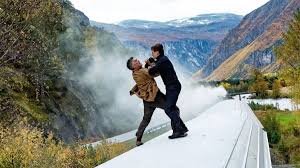
Ghost Protocol, directed by Brad Bird, saw Cruise performing increasingly daring practical stunts, including scaling the Burj Khalifa, the world’s tallest building. This commitment to practical effects and real-world stunts became a hallmark of the later films. Mission: Impossible – Rogue Nation (2015) and Mission: Impossible – Fallout (2018) continued this trend, with Cruise performing a HALO jump and piloting a helicopter through treacherous terrain, respectively. These stunts aren’t just spectacle; they’re integral to the narrative, enhancing the sense of realism and danger.
Tom Cruise: The Driving Force
Tom Cruise’s dedication to the Mission: Impossible franchise is undeniable. He’s not just the star; he’s a producer and a driving force behind the films’ commitment to practical effects and ambitious stunts. His willingness to put himself in harm’s way for the sake of entertainment has earned him the respect of both fans and filmmakers. As reported by The Hollywood Reporter, Cruise’s dedication is legendary, often training for months to master complex physical feats.
The Latest Installment: Dead Reckoning
Mission: Impossible – Dead Reckoning Part One (2023) continues the franchise’s legacy of thrilling action and suspense. The film introduces a new formidable adversary and pushes Ethan Hunt and his team to their limits. The critical reception has been overwhelmingly positive, praising the film’s intricate plot, stunning visuals, and, of course, Cruise’s incredible stunts. The film’s success demonstrates the enduring appeal of the franchise and its ability to adapt and innovate.
The Future of IMF
With Dead Reckoning Part Two already in development, the future of Mission: Impossible looks bright. The franchise continues to attract top talent and push the boundaries of what’s possible in action cinema. It’s a testament to the enduring power of a well-crafted story, compelling characters, and a star who is willing to risk it all for the sake of entertainment.