
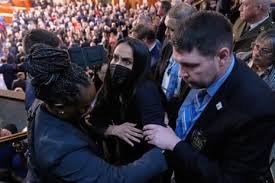
Aliya Rahman Arrest at State of the Union: A Case of Protest and Political Tension
During President Trump’s State of the Union address, a moment of political tension unfolded as Aliya Rahman, a US citizen and guest of Congresswoman Ilhan Omar, was arrested by Capitol police. The arrest has sparked debate about freedom of expression, immigration policy, and the treatment of constituents.
The Arrest and Initial Reports
Rahman, a Minneapolis resident, was invited by Congresswoman Omar to highlight the impact of increased immigration enforcement efforts. Her invitation came after a January incident where she was forcibly removed from her car and dragged by immigration agents while attempting to reach a doctor’s appointment. Rahman, who has a disability, explained to the officers at the time, “I’m disabled, trying to go to the doctor up there. That’s why I didn’t move.” She later reported sustaining shoulder injuries during the encounter.
According to Capitol police, Rahman “started demonstrating” during the President’s speech, violating event rules. A police statement indicated she was asked to sit down but “refused to obey our lawful orders.” She was subsequently arrested for unlawful conduct and disruption of Congress.
Rahman’s Account of the Incident
Rahman herself offered a different perspective. In an interview with Democracy Now, she stated she was standing silently before being arrested. “No buttons, no facial expressions, no gestures, no signs, not one sound,” she explained. She stood up in response to what she described as “some of the most racist things” she had heard from a leader, specifically referencing comments about her city.
A Capitol police spokesperson countered this claim, stating that standing is not permitted and that Rahman was explicitly told to sit. “It’s not allowed. She was told to sit. She refused. It’s simple.”
Ilhan Omar’s Response and Call for Investigation
Congresswoman Omar swiftly responded to the arrest, calling for a full investigation. She emphasized that Rahman was standing silently for a short period, alongside other guests, and was forcibly removed despite informing officers about her pre-existing shoulder injuries. Omar described the response as “heavy-handed” and a “chilling message about the state of our democracy.”
Rahman was taken to George Washington University hospital for treatment before being booked at the United States Capitol police headquarters. Omar also noted that during his speech, Trump attacked sanctuary cities and officials blocking the “removal of criminal aliens,” prompting Omar herself to shout, “You have killed Americans,” in reference to the deaths of two US citizens in Minneapolis during federal law enforcement operations.
Context of Increased Immigration Enforcement
This incident occurs against a backdrop of increased immigration enforcement under the Trump administration. Rahman, a software engineer, was invited by Omar to illustrate the “real harm” caused by these policies. As Rahman stated in a pre-address interview, elected officials should focus on “policies and ways to govern this country that make people’s lives better,” rather than “construct[ing] enemies” to avoid their responsibilities.
The Capitol police clarified that Omar and other lawmakers who protested during the speech were not arrested due to the protections afforded by the speech or debate clause of the Constitution. They reiterated that demonstrating is prohibited at the State of the Union address.
Aftermath and Current Status
Congresswoman Omar reported that Rahman is now “back and safe” following her arrest and hospital visit. The case continues to draw attention to the complexities of immigration policy, freedom of expression, and the treatment of individuals within the political arena. You can find more information about immigration policies and rights at the American Civil Liberties Union (ACLU) website.



