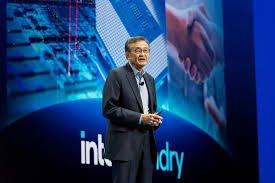
Intel Corporation. The name itself is synonymous with the evolution of computing. For over five decades, Intel has been at the forefront of semiconductor technology, powering everything from personal computers to data centers and beyond. But in a rapidly changing technological landscape, what does the future hold for this industry giant? This article dives deep into Intel’s current state, recent innovations, and future outlook.
A Legacy of Innovation: From Microprocessors to AI
Intel’s journey began in 1968, and quickly became a household name with the introduction of the 4004 microprocessor in 1971 – a pivotal moment that launched the personal computer revolution. Throughout the 80s and 90s, Intel’s processors, like the 8086, 286, 386, and Pentium series, dominated the market. This dominance continued with the Core i-series, establishing Intel as the go-to choice for performance and reliability.
However, the last decade has seen increased competition from AMD, particularly with their Ryzen processors. Intel responded with architectural improvements and a renewed focus on manufacturing. Today, Intel isn’t just about CPUs. The company is heavily invested in areas like Artificial Intelligence (AI), with products like the Intel® Gaudi™ AI accelerator, designed to compete with NVIDIA in the rapidly growing AI market. They are also making significant strides in areas like mobileye (autonomous driving technology) and networking.
Recent Developments & Key Technologies
Intel’s recent roadmap has been focused on regaining process technology leadership. The introduction of the Intel 7 process node (previously known as 10nm Enhanced SuperFin) marked a crucial step. More recently, Intel has been pushing forward with Intel 4 and Intel 3, aiming to deliver performance and efficiency gains. The ‘RibbonFET’ and ‘PowerVia’ technologies, slated for future process nodes, promise further advancements in transistor design and power delivery.
- Intel 4 Process: Expected to deliver performance improvements and efficiency gains.
- Intel 7 Process: Currently powering the 13th and 14th generation Core processors.
- Xeon Scalable Processors: Designed for data centers and servers, offering high performance and scalability.
- Arc GPUs: Intel’s foray into the discrete graphics card market, challenging NVIDIA and AMD.
- AI Acceleration: Investments in AI-specific hardware, like Gaudi, to cater to the growing demand for AI computing.
Intel Stock Analysis & Future Outlook
Intel’s stock (INTC) has experienced volatility in recent years, reflecting the challenges and opportunities facing the company. Factors influencing the stock price include competition, manufacturing yields, and overall economic conditions. Analysts at CNBC currently rate the stock as a ‘Hold’, citing potential for growth in the AI market but also acknowledging ongoing competitive pressures. The company’s commitment to IDM 2.0 – a strategy encompassing internal manufacturing, external foundries, and packaging – is seen as crucial for its long-term success. You can find more detailed stock information on Yahoo Finance.
Looking ahead, Intel faces a complex landscape. Successfully executing its IDM 2.0 strategy, regaining process technology leadership, and capitalizing on the AI boom will be critical. The company’s ability to innovate and adapt will determine its position in the future of computing. The competition is fierce, but Intel’s legacy and ongoing investments suggest it remains a major player for years to come.