Planetary Parade: A Rare Alignment of Planets in 2026
Get ready to look up! At the end of February 2026, a spectacular planetary parade will grace our skies, offering a breathtaking view of multiple planets aligning. This celestial event, where several planets appear to line up from our perspective on Earth, is a sight to behold, and most of the participating planets will be visible to the naked eye.
What is a Planetary Parade?
A planetary parade doesn’t mean the planets are actually in a straight line – they’re simply clustered together on the same side of the Sun as Earth. While smaller gatherings of two or three planets are relatively common, seeing four or five visible without assistance is less frequent, occurring every few years. Last year, we were treated to lineups of six and even all seven planets! This year’s planetary alignment promises to be another stunning display.
When and Where to See the Planetary Parade
Mark your calendars! On Saturday, February 27th, 2026, Mercury, Venus, Jupiter, and Saturn will be readily visible to the naked eye, provided the skies are clear. Uranus and Neptune will require binoculars or a telescope for viewing.
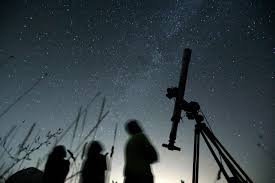
Optimal Viewing Time: Head outside approximately an hour after sunset. Find a location away from tall buildings and trees that could obstruct your view. Look towards the western sky. You’ll first notice Mercury, Venus, and Saturn close to the horizon. Jupiter will be positioned higher in the sky, along with Uranus and Neptune.
How to Identify the Planets
Wondering how to tell a planet apart from a star? Planetary scientist Sara Mazrouei of Humber Polytechnic in Canada offers a simple trick: “If it’s twinkling, it’s a star. If it is not twinkling, it’s a planet.”
The planetary parade will be visible throughout the weekend and in the days following. However, Mercury will eventually dip below the horizon. Don’t worry if you miss it entirely – at least one bright planet is visible on most nights, according to NASA.
A Connection to the Past
Witnessing this celestial event is a unique opportunity to connect with astronomers of centuries past. As planetary scientist Emily Elizondo of Michigan State University explains, ancient astronomers relied solely on observing the stars and planets to understand the universe. “Which is something that we can do today,” she says. It’s a humbling reminder of our place in the cosmos and the enduring human fascination with the night sky.
Source: The Associated Press