
Estonia Fortifies Border with Russia and Belarus: A Deep Dive into the Baltic Defence Line
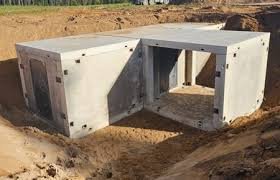
BERLIN – Estonia has initiated a public procurement process for 600 modular bunkers, marking a significant step in a collaborative effort by the Baltic states to strengthen their extensive border with Russia and Belarus. This move represents a crucial phase in the region’s ambitious fortification program, reflecting a proactive approach to regional security.
The Baltic Defence Line: A New Security Paradigm
The Estonian Centre for Defence Investments (ECDI) announced the competitive negotiated procurement on February 19th, seeking companies capable of manufacturing and delivering substantial quantities of concrete structures to designated storage areas along the Baltic Defence Line. The tender details are publicly available in the Estonian Public Procurement Register.
The Baltic Defence Line is a joint initiative undertaken by Estonia, Latvia, and Lithuania. Its core objective is to establish a robust military defense starting “from the first meter of national territory.” This represents a notable shift in strategy, moving away from previous doctrines that considered trading territory for time while awaiting allied reinforcements. This change in thinking aligns with NATO’s evolving strategic approach to regional defense.
Latvia’s Potential Involvement and Collaborative Efforts
Latvia’s Ministry of Defence has expressed strong interest in participating in the bunker procurement and is currently in discussions with Tallinn regarding potential collaboration, according to Estonian officials. While the Baltic Defence Line is a unified project across the three nations, the procurement and construction phases have largely been executed independently.
Asko Kivinuk, Deputy Director General of the ECDI, highlighted the economic benefits of regional cooperation. “A joint procurement enables cost savings through economies of scale,” he stated. Estonia has already allocated €60 million ($71 million) to this critical project.
Progress and Timelines
“The first bunkers for the Baltic Defence Line have already been delivered, and their installation is progressing steadily in Southeast and Northeast Estonia,” Kivinuk added. “The experience gained from these initial deployments provides us with the confidence to proceed with a larger-scale procurement.”
Estonia confirms that all previously acquired “counter-mobility assets” have been strategically positioned in pre-designated storage locations. Simultaneously, work is underway on an anti-mobility trench system to further enhance defensive capabilities. The ECDI aims to complete the Baltic Defence Line by the end of 2027.
Early Challenges and Lessons Learned
Defense News reported in December that Estonia had successfully deployed the first five bunkers along the line, a symbolic milestone intended to gain practical experience with the rapid and effective deployment of these modular structures. Initial deployments revealed unforeseen challenges related to terrain, land ownership, and production costs, which have been addressed to streamline full-scale construction. Defense News provides ongoing coverage of these developments.
Recent reports from Estonian media indicate that nine bunkers have been installed to date, demonstrating continued progress in the fortification efforts.
About the Author
Linus Höller is the Europe correspondent and OSINT investigator for Defense News. He specializes in reporting on arms deals, sanctions, and geopolitical dynamics shaping Europe and the world. He holds advanced degrees in WMD nonproliferation, terrorism studies, and international relations, and is fluent in English, German, Russian, and Spanish.



