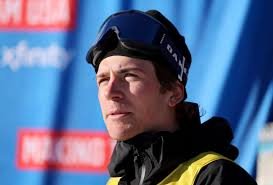
Hunter Hess: From Political Target to Olympic Contender
Hunter Hess became a focal point at the 2026 Winter Olympics, not for his athletic prowess initially, but after facing critical remarks from former President Donald Trump. Despite the unexpected controversy, Hess demonstrated remarkable resilience and determination, captivating audiences with his performance in the freeski halfpipe.
The controversy began when, during a press conference, Hess expressed “mixed emotions” about representing the United States at the Milan Cortina Games, describing it as “a little hard.” President Trump responded on social media, labeling Hess “a real loser” and questioning whether it would be “very hard to root for someone like (Hess).”
A Difficult Two Weeks
Hess described the subsequent period as “probably the hardest two weeks of my life,” admitting he had never experienced such intense criticism. The condemnation weighed heavily on him as he waited 12 days for his Olympic debut.
“Really pretty taxing on his mental, for sure,” said teammate Birk Irving. Nick Goepper added, “I definitely wouldn’t wish that upon any competitor. Normally you don’t do an interview and get called out by the President.”
Team USA’s Unwavering Support
Amidst the negativity, Hess received an outpouring of support from his teammates, friends, and family. He felt the entire Team USA rallied behind him, offering encouragement and solidarity. Messages from loved ones in his hometown of Bend, Oregon, meant the world to him.
“Team USA has really helped me get back on my feet,” Hess shared. Fellow Olympians Chloe Kim and Eileen Gu also voiced their support, emphasizing the unifying power of sport. Gu stated, “The whole point of sport is to bring people together… I hope that they can ski to their very best.”
Qualifying for the Final
Despite the emotional and physical toll, Hess excelled in the freeski halfpipe qualifying rounds in Livigno. He aced both runs, easily advancing to the final. He even playfully responded to the criticism by forming the letter ‘L’ with his hands after his first run and updating his Instagram bio to “A real loser.”
Facing Adversity with Grit
Hess’s performance was even more impressive considering he was battling several injuries. He suffered a hematoma in his right hip, requiring a blood drain, and an MRI revealed bone bruising in his shoulder. He also potentially fractured his hand and continued to deal with persistent knee pain throughout the season. The qualification rounds were even moved to the same day as the final, a situation he hadn’t faced since he was 12 years old.
“I’m so happy just to be skiing and riding to the best of my ability right now,” Hess said. “This sport is my lifeline. It’s everything to me. So to be able to come out here and put down a run I’m proud of and happy with means the world to me… I wear this flag with pride. I’m so honored to be on the team and representing with my teammates.”
A Broader Context: Political Spotlight on the Olympics
Hess wasn’t the only athlete navigating politically charged circumstances. Gus Kenworthy, representing Great Britain after previously competing for the United States, faced criticism and threats related to his stance on U.S. Immigration and Customs Enforcement (ICE). Kenworthy highlighted the disturbing nature of the online attacks, stating, “No-one wants to read bad things about themselves, things that are threats and violent and scary and homophobic.”
Ultimately, Hess’s story is one of resilience, determination, and the power of support. He demonstrated that even in the face of adversity, athletes can rise to the occasion and represent their country with pride. All four American freeskiers – Hess, Goepper, Irving, and Ferreira – finished in the top six, a testament to the strength of Team USA.
Source: NBC Sports