Bambu Lab P3C Review: The Budget-Friendly Tool Changer Revolution
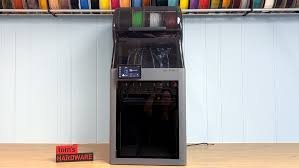
Bambu Lab P3C Review: High-End Multi-Material Printing on a Budget
For many 3D printing enthusiasts, the dream has always been a seamless multi-material experience without the excessive waste (the infamous “poop”) and the high price tag of industrial machines. Enter the Bambu Lab P3C, the “little brother” to the powerhouse H3C. Designed for those who want professional tool-changing capabilities without breaking the bank, the P3C brings a new level of versatility to the desktop.
What is the Bambu Lab P3C?
The Bambu Lab P3C is a sophisticated tool-changer 3D printer that offers a middle ground between entry-level machines and high-end industrial hardware. Unlike standard multi-filament systems, the P3C utilizes a Swaptek system, meaning each tool has its own filament path, heater, and hardened steel nozzle. This allows for lightning-fast swaps and the ability to use different nozzle sizes in a single print.
Key Specifications at a Glance
- Build Volume: 256 x 256 x 260 mm
- Tool Capacity: 5 to 7 tools (expandable)
- Nozzle Material: Hardened Steel
- Filament Support: PLA, TPU, ABS, ASA, PA, PC, PET and fiber-reinforced materials
- Special Feature: FlexFeed extruder with Active Grip Control
P3C vs. H3C: Which One Should You Choose?
While the P3C shares the DNA of the H3C, it makes some strategic cuts to keep the price point accessible (roughly half the cost of its larger sibling). Here is how they stack up:
| Feature | Bambu Lab P3C | Bambu Lab H3C |
|---|---|---|
| Build Volume | 256 x 256 x 260 mm | 330 x 320 x 325 mm |
| Heated Chamber | No | Yes |
| Filament Loading | Manual (AMS 3P) | Automatic |
| Price (Approx.) | $1,149 – $1,299 | $2,499 |
The TPU Game Changer
If you work with flexible materials, the P3C is a revelation. Thanks to the AMS 3P bypass ports, TPU can skip the traditional tubes, drastically reducing friction. The printer even supports the “old school” 2.85mm filament, specifically for super-squishy 75A TPU.
During testing, the P3C proved to be a “send it and forget it” machine. Whether printing complex treads for RC cars or detailed artistic models, the results were consistent, with zero failures and virtually no stringing.
The Trade-offs: What You Need to Know
No machine is perfect, and the P3C’s affordability comes with a few compromises:
- Manual Loading: The “A” in AMS 3P is a bit misleading here; there is no motor for loading. You must manually feed the filament to the nozzle, which can be tedious when setting up seven different colours.
- Vertical Footprint: Despite being smaller than the H3C, it still requires nearly 4 feet (1,212 mm) of vertical clearance to fully open the AMS lid. A step-stool is practically mandatory for standard countertops.
- Tool Maintenance: Changing tools can be frustrating due to tight spaces and sharp plastic edges within the assembly.
Performance Across Materials
Beyond TPU, the P3C handles a wide variety of filaments with ease. Its HEPA and active carbon filtration make it safe for printing “stinkier” materials like ABS and ASA. In our tests, parts fit together perfectly, and bed adhesion (using a PEI textured sheet) was rock solid, even when loading plates to capacity.
Final Verdict: Is it Worth it?
The Bambu Lab P3C is an exceptional choice for makers who want the power of a tool changer without the industrial price tag. While the manual filament loading and the height requirements are drawbacks, the print quality and multi-material efficiency are unmatched in its price bracket.
If you are looking to dive into high-quality TPU printing or complex multi-colour projects without the waste of a single-nozzle system, the P3C is a fantastic investment. For more information on compatible materials, check out the official Bambu Lab store.
📰 You May Also Like