Obama, Trump, and the UFO Buzz: A Deep Dive into the Alien Debate
The discussion surrounding unidentified aerial phenomena (UAPs), commonly known as UFOs, has recently been reignited, fueled by comments from former President Barack Obama and a surprising turn from former President Donald Trump. What began with Obama’s casual acknowledgement of the possibility of extraterrestrial life has quickly escalated into calls for government transparency and a renewed focus on the search for life beyond Earth.
Obama’s Revelation and Subsequent Clarification
Last Saturday, during an interview on the Brian Tyler Cohen Podcast, Obama stated, “They’re real, but I haven’t seen them, and they’re not being kept in Area 51.” He playfully dismissed the idea of a secret underground facility, suggesting a massive conspiracy if such a thing existed and was hidden from the President. This comment quickly went viral, prompting Obama to clarify his position on Instagram. He emphasized that he saw no evidence of extraterrestrial contact during his presidency (2009-2017), stating, “Really!”
Obama’s initial statement wasn’t a claim of confirmed contact, but rather an acknowledgement of the statistical probability of life existing elsewhere in the vast universe. This nuanced perspective highlights the growing acceptance of the possibility of extraterrestrial life within scientific and political circles.
Trump’s Response and Demand for Disclosure
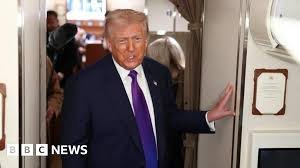
Former President Trump initially criticized Obama’s comments, stating, “He’s not supposed to be doing that,” and accusing him of revealing classified information. However, in a dramatic shift, Trump announced on Truth Social that he would direct US agencies, including the Department of Defense, to “begin the process of identifying and releasing” government files related to aliens, extraterrestrial life, UAPs, and UFOs. This decision came “based on the tremendous interest shown” by the public.
Interestingly, Trump admitted he doesn’t know if aliens are real, stating, “Well, I don’t know if they’re real or not.” Despite his initial skepticism, he’s now advocating for greater transparency regarding government knowledge of these phenomena.
Government Reports and Ongoing Investigations
The Pentagon’s 2024 report concluded that there was “no evidence” of the US government encountering alien life, attributing most UFO sightings to ordinary objects. However, the topic remains a subject of intense scrutiny. In 2023, the US House of Representatives held a panel on UAPs, though it yielded no definitive proof of extraterrestrial life.
While an initial investigation was closed in 2019, prosecutors have indicated that new revelations “warrant further examination.” This suggests that the investigation into UAPs is far from over.
The Broader Context
The renewed interest in UFOs and extraterrestrial life comes amidst a growing global fascination with the unknown. The search for life beyond Earth is a fundamental question that has captivated humanity for centuries. Organizations like NASA are actively involved in the search for exoplanets – planets orbiting other stars – that could potentially harbor life.
The political dynamic between Obama and Trump adds another layer to this story. Their longstanding rivalry has seemingly spurred a competition to address the topic, albeit from different angles. Whether this will lead to genuine disclosure or remain a political spectacle remains to be seen.
As the debate continues, one thing is clear: the question of whether we are alone in the universe is no longer relegated to the realm of science fiction. It’s a topic of serious discussion, prompting governments and scientists alike to explore the possibilities.