
Press Freedom Under Fire: Why China Barred a Bloomberg Journalist from a Global Summit
Press Freedom Under Fire: Why China Barred a Bloomberg Journalist from a Global Summit
In the world of high-stakes diplomacy, the interaction between a journalist and a world leader is often a delicate dance of inquiry and evasion. However, in China, this dance can quickly turn into a confrontation. A recent incident involving Bloomberg TV journalist Annmarie Hordern has once again brought the issue of media censorship and press freedom into the international spotlight.
The Incident in Shenzhen: A Question Too Far?
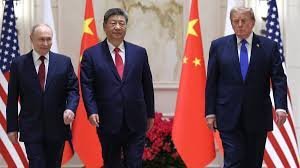
The scene unfolded in Shenzhen, where a trilateral meeting was scheduled between U.S. President Donald Trump, Chinese leader Xi Jinping, and Russian President Vladimir Putin. Annmarie Hordern, a seasoned journalist, found herself denied access to this major event by Chinese authorities.
The reason? A question she posed during a previous encounter between President Trump and President Xi. Hordern had asked Trump whether the former CEO of Nvidia, Jensen Huang, had shown disloyalty to the United States. While the question was directed at the U.S. President, Chinese officials deemed the delivery “impolite” because it was asked loudly.
According to an anonymous White House official, the U.S. administration pressured China to allow Hordern’s admission, but the Chinese government remained adamant. This clash highlights the friction between Western journalistic standards and the strict protocols enforced by the Chinese state.
A Disturbing Pattern of Media Control
This is not an isolated event. The restriction of a journalist in China is part of a long-standing strategy to tightly control the narrative surrounding its leaders. To understand the gravity of the situation, one only needs to look back at 2022.
- n
- The Bali Incident: During a meeting between Joe Biden and Xi Jinping in Indonesia, a White House pool reporter was reportedly pulled by her backpack and pushed toward the door while attempting to ask a question about human rights.
- Diplomatic Pressure: In both cases, the act of “shouting” a question—a common practice in crowded press scrums—was interpreted by Chinese authorities as a breach of etiquette worthy of expulsion.
The Broader Struggle for Journalism in China
For international reporters, the environment in China has become increasingly hostile. Over the last few decades, the country has a history of expelling foreign journalists whose coverage doesn’t align with the state’s interests. The tactics used to stifle the press include:
- Detentions and Interrogations: Reporters visiting sensitive areas often face questioning by state security.
- Forced “Self-Criticism”: Some journalists have been coerced into signing reports admitting to “mistakes” in their reporting.
- Severe Penalties for Locals: For Chinese journalists, the stakes are even higher. Those who deviate from the Communist Party line face censorship, termination of employment, or even imprisonment.
The struggle for the right to report without fear is a global challenge. Organizations like Reporters Without Borders continue to document these violations, emphasizing that a free press is essential for global accountability.
Final Thoughts
The barring of Annmarie Hordern is more than just a diplomatic spat; it is a reminder of the precarious position of the modern journalist when operating in authoritarian regimes. When “politeness” is used as a shield to avoid transparency, the truth becomes the first casualty of diplomacy.
📰 You May Also Like


