Roger Zakheim and the ‘Peace Through Strength’ Doctrine: A Cold War Strategy for Today?
The Legacy of Reagan’s Military Strategy: Analyzing Roger Zakheim’s Thesis
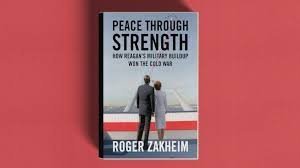
In the complex arena of international relations, few phrases are as evocative as “Peace Through Strength.” This doctrine, central to the administration of Ronald Reagan, is the focal point of Roger Zakheim, Director of the Ronald Reagan Institute, in his comprehensive work, Peace Through Strength: How Reagan’s Military Buildup Won the Cold War.
Zakheim posits a bold thesis: that the concerted military expansion led by the United States in the 1980s didn’t just deter the Soviet Union—it effectively broke it. By overawing the Kremlin, Zakheim argues that the U.S. forced a shift toward the more flexible leadership of Mikhail Gorbachev, ultimately accelerating the dissolution of the USSR. But does this historical victory provide a reliable blueprint for 21st-century diplomacy?
The Internal Clash: Budgetary Discipline vs. Military Might
One of the most fascinating aspects of Zakheim’s analysis is the exploration of the ideological warfare within the Republican Party during the Reagan era. The administration was split between two primary factions:
- n
- The Fiscal Hawks: Led by David Stockman, this group prioritized balancing the budget and reducing the size of the federal government.
- The Defense Hawks: Led by Secretary of Defense Caspar Weinberger, this faction believed that military superiority was the only priority that truly mattered, even at the cost of fiscal deficits.
n
n
Ultimately, the “Defense Hawks” won. Zakheim highlights that for Ronald Reagan, the military buildup was not merely a policy choice—it was a matter of principle. This victory defined the GOP’s priorities for decades, establishing a precedent where high military spending often outweighs other conservative goals.
Was the Military Buildup the Sole Cause of Soviet Collapse?
While Zakheim makes a compelling case for the impact of U.S. military spending, critics argue that this perspective may be oversimplified. To understand the Cold War‘s end, one must look beyond the weaponry. The Soviet Union was crumbling from within due to:
- Economic Stagnation: An ossified system plagued by pervasive inefficiencies.
- Ideological Shifts: A new, younger generation of Soviet leaders eager for openness (Glasnost) and economic restructuring (Perestroika).
- Societal Pressure: An increasingly dissatisfied population unable to ignore the disparity between East and West.
Without these internal failures, a massive military buildup might have led to a catastrophic confrontation rather than a peaceful surrender.
Applying Cold War Logic to the 2020s: A Risky Venture
The most contentious part of Roger Zakheim’s argument is the application of Reagan-era strategies to today’s geopolitical climate. The world of the 1980s was bipolar; today, it is multipolar.
Modern U.S. leadership must navigate a landscape that includes not only Russia—now a shadow of its former self—but also the People’s Republic of China, a strategic peer competitor with far more sophisticated economic and technological capabilities than the USSR ever possessed.
Attempting to “overawe” China through pure military intimidation could be a dangerous gamble. In a world of economic interdependence, a myopic focus on military buildup could trigger national bankruptcy or, worse, a great-power war that neither side can afford.
Final Thoughts: Strength or Stability?
Roger Zakheim’s work serves as a vital reminder of the power of resolve and strategic investment. However, the lesson of the Cold War may not be that more weapons equal peace, but that a combination of strength, economic vitality, and diplomatic flexibility is what truly secures victory. In the 2020s, the challenge is to find a balance that avoids the pitfalls of aggression while maintaining the security of the democratic world.
📰 You May Also Like