Mirra Andreeva: The Meteoric Rise of Tennis’s Youngest Powerhouse
Mirra Andreeva: The Meteoric Rise of Tennis’s Youngest Powerhouse
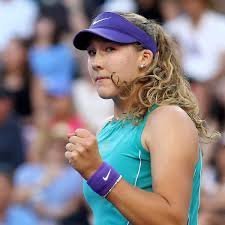
The world of professional tennis is witnessing the ascent of a true prodigy. Mirra Andreeva, the 19-year-old sensation from Russia, has turned the California desert of Indian Wells into her personal stage for both triumph and transformation. Her journey to the WTA Finals championship match is not just a story of athletic dominance, but a fascinating study of emotional growth under the global spotlight.
The Path to the Final: Overcoming the “Diva” Narrative
Andreeva’s run at the WTA Finals began amidst a storm of controversy. After a “hot mic” incident where Jessica Pegula referred to her as a “diva,” the young star didn’t shrink from the pressure—she thrived on it. Andreeva dismantled her opponents with clinical precision, securing 6-4, 6-0 victories over heavyweights like Elina Svitolina and Aryna Sabalenka.
Her methodical 6-3, 6-4 victory over Pegula in the semifinals cemented her status as the tournament’s overwhelming favorite. By reaching the final without dropping a single set, Andreeva has officially claimed the World No. 2 ranking, a milestone she acknowledges with a blend of youthful joy and surprising maturity.
A Clash of Generations: Andreeva vs. Svitolina
The final presents a compelling narrative of contrast. On one side, we have the 32-year-old veteran Elina Svitolina, who is fighting for redemption and a crowning achievement in one of her best seasons. On the other, Mirra Andreeva, the youngest finalist since Maria Sharapova in 2004.
- n
- Mirra Andreeva: Second-youngest player in history to win her first four matches at the event, trailing only the legendary Chris Evert.
- Elina Svitolina: A resilient veteran who clawed back from the brink of defeat against Karolína Muchová to reach the final.
The Indian Wells Rollercoaster: From Meltdown to Mastery
Indian Wells has always been a place of extremes for Andreeva. In March 2025, she captured her first WTA 1000 title at the BNP Paribas Open. However, the pressure of the professional circuit is immense. A year prior, the world witnessed a public meltdown that saw the teenager erupt in frustration toward the crowd.
Yet, it is this raw emotionality that makes her captivating. From clutching plushies to her candid post-match interviews, Andreeva remains authentically herself. The difference now is her ability to ride the “emotional pendulum.” After winning her first Grand Slam title at the French Open, Andreeva has learned that losses are not failures, but lessons.
Learning to Handle the Spotlight
“The most important is how you approach the next tournaments… learn from the losses and try to move forward,” Andreeva stated, reflecting on her growth. She has transitioned from the “pity parties” of her early teens to a professional mindset where she can process social media noise and critical comments without losing focus.
As she prepares to battle for the trophy, Mirra Andreeva is no longer just a promising talent—she is a force of nature. Whether she wins or loses, her trajectory suggests that the future of women’s tennis is in very capable, albeit emotional, hands.
📰 You May Also Like