Shota Imanaga News: Cubs Secure Ace, Tucker Heads to Free Agency in Pivotal Offseason Moves
The Chicago Cubs have been making significant waves this offseason, navigating complex contract situations to shape their roster for future contention. Recent crucial decisions concerning star pitcher Shota Imanaga and outfielder Kyle Tucker have solidified parts of their strategy, while also opening new avenues.
Here’s a deep dive into the latest developments impacting the North Siders and the broader MLB free agency landscape.
Imanaga’s Return: A Strategic Play by the Cubs
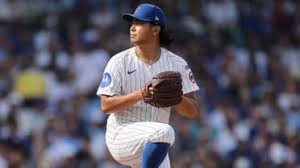
In a move that sends ripples of relief through the Cubs fanbase, left-handed ace Shota Imanaga has officially accepted a one-year qualifying offer (QO) worth an impressive $22.025 million. This decision ensures Imanaga will remain a cornerstone of the Cubs’ rotation for at least the 2026 season, opting against testing the deeper waters of free agency at this juncture.
The path to this agreement involved several intricate steps:
- Initially, the Cubs declined a three-year, $57.75 million club option that would have extended Imanaga’s tenure through 2028.
- Following this, Imanaga chose to decline a $15.25 million player option, which was triggered by the Cubs’ initial decision.
- With both options off the table, Imanaga became eligible for the QO, which his camp ultimately decided to accept after evaluating the market.
This acceptance marks a substantial pay raise of $6.8 million over his initial 2026 salary structure and, critically, allows Imanaga to re-enter free agency next offseason without the qualifying offer process encumbering his options. His performance over his first two seasons with the Cubs speaks volumes: a solid 3.28 ERA with 291 strikeouts against just 54 walks in 54 starts. An All-Star in 2024, Imanaga also received votes for both Rookie of the Year and the Cy Young Award, showcasing his elite talent despite a slight dip in form this season (3.73 ERA over 144.2 innings, with a notable increase in home runs allowed).
“It felt like a no-brainer for us,” Cubs general manager Carter Hawkins commented on extending the QO. “We like Shota a lot. Obviously, we enjoy having him. … I know it was a complicated contract structure.” The decision reflects the Cubs’ strong desire to retain their impact pitcher. For more on how qualifying offers work in MLB, you can visit MLB.com’s explanation of the Qualifying Offer.
Kyle Tucker: A Premier Talent Hits the Open Market
While Imanaga’s situation brought clarity, outfielder Kyle Tucker’s decision sets him on a different trajectory. Tucker declined the same one-year qualifying offer, making him one of the most coveted all-around position players available in this offseason’s free-agent class.
From the outset, it was widely anticipated that Tucker would reject the QO, aiming for a lucrative, multi-year deal on the open market. The Cubs’ leadership expressed their hopes but acknowledged the reality of the situation.
“We told him, ‘We’d love to figure out ways to put you in a Cubs uniform again,’” Hawkins stated. “But, we’ll see how it plays out.”
Tucker’s 2025 season was stellar, earning him All-Star honors and a Silver Slugger award. Despite missing time due to injuries, he posted impressive numbers: 22 homers, 25 doubles, 25 steals, 73 RBIs, 91 runs, and an outstanding .841 OPS over 136 games. His 4.6 bWAR marked his fifth consecutive season above 4.5, underscoring his consistent elite performance.
“When we were at our best, he was at his best,” Cubs president of baseball operations Jed Hoyer added. “He’s a great player. We had a really good experience with him.” Fans can track all the latest MLB free agency rumors and signings at MLB.com’s Free Agency Tracker.
What Happens Next for the Cubs?
With Imanaga secured, the Cubs’ rotation has a formidable presence. However, Tucker’s departure means they now hold a valuable asset: Draft-pick compensation for the 2026 Draft if he signs with another team. This would grant Chicago a pick after Competitive Balance Round B, following the Draft’s second round.
A prime example of this compensation in action was in 2023 when the Cubs received the 68th overall pick after catcher Willson Contreras declined a QO and signed elsewhere. That pick led to the selection of righty Jaxon Wiggins, currently a highly-rated prospect.
Conversely, signing a free agent who declined a QO comes with its own costs. For the Cubs, this would typically involve forfeiting their second-highest Draft pick and $500,000 in international bonus pool money. Signing a second player in this category would further cost them their third-highest Draft pick.
Despite these penalties, the Cubs remain open to pursuing high-caliber free agents. Jed Hoyer confirmed that these costs wouldn’t necessarily deter them, especially with clear needs in the rotation. Potential targets could include pitchers like Dylan Cease, Zac Gallen, Michael King, Ranger Suárez, and Framber Valdez, all of whom declined qualifying offers and are now prominent names on the free-agent market.
The Chicago Cubs’ offseason is shaping up to be a compelling blend of retention and strategic pursuit. Securing Imanaga ensures stability, while Tucker’s departure sets the stage for impactful draft compensation and potentially aggressive moves in the pitching market. Stay tuned for more Chicago Cubs news and MLB updates as the offseason unfolds!