The End of the Road for Cybertruck? Tesla Shifts Focus to Autonomous Cybercab
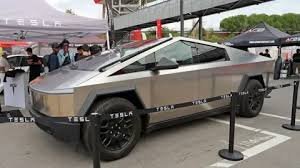
The End of the Road for Cybertruck? Tesla Shifts Focus to Autonomous Cybercab
In a move that has sent shockwaves through the electric vehicle community, Elon Musk has announced that Tesla will wind down production of the Cybertruck at its Texas gigafactory next year. While the company hasn’t explicitly stated if the vehicle is being killed off entirely or simply relocated, the primary driver behind this decision is clear: making room for the next big leap in transportation—the self-driving Cybercab.
The news gained further weight when Wes Morrill, the project’s lead engineer, hinted on X (formerly Twitter) that the Cybertruck’s journey as a primary product might be over, stating that it served as an “incredible technology development platform” that will now live on through the Cybercab.
A Legacy of Controversy and Innovation
Since its first reveal, the Cybertruck has been one of the most polarizing vehicles ever to hit the road. With its stark, angular stainless-steel body, it drew comparisons to the dystopian landscapes of Blade Runner. While diehard fans praised its retro-futuristic aesthetic, critics were less kind, often describing the design as an eyesore.
The road to production was anything but smooth. Who could forget the infamous 2019 demonstration? In an attempt to showcase the “unbreakable” glass, Musk witnessed the windows shatter in real-time during a live presentation. Despite this gaffe and several years of delays, the vehicle maintained a strong initial hype, garnering roughly 146,000 orders during its development phase.
Market Reality: Sales, Recalls, and Price Tags
Despite Elon Musk’s personal passion for the project—calling it the “best product Tesla has ever made”—the market response was mixed. The Cybertruck struggled to penetrate the highly competitive US and North American truck markets. Several factors contributed to this struggle:
- n
- Pricing Hurdles: Initially pitched as an affordable option, the final price tag for a fully-loaded model started at $61,000, while the high-performance “Cyberbeast” climbed to a staggering $102,000.
- Quality Concerns: The vehicle faced significant hurdles, including a 2025 recall affecting over 46,000 units due to trim pieces that were prone to falling off.
- Niche Appeal: While it captured the imagination of tech enthusiasts, it failed to convert the average truck buyer looking for utility over novelty.
What This Means for the Future of Tesla
The transition from the Cybertruck to the Cybercab signals a strategic pivot for Tesla. By prioritizing autonomous ride-hailing technology over a niche luxury truck, Musk is doubling down on AI and robotics.
For the owners of existing Cybertrucks, there is some solace. Musk has assured fans that the “Cybertruck fleet will be around for a long time,” suggesting that while production may cease, support and the legacy of the vehicle will persist.
As we move toward 2026, the automotive world will be watching closely to see if the Cybercab can achieve the mass-market success that the Cybertruck, for all its boldness, couldn’t quite grasp.
📰 You May Also Like