Milan Cortina 2026: Norway’s Unstoppable Medal Count
TESERO, Italy (AP) — The slopes of the Dolomite mountains are awash in Norwegian flags, a vibrant display mirroring the nation’s incredible performance at the Milan Cortina 2026 Winter Olympics. Fans have established a dedicated medal tally, adding a gold sticker for each victory. And victories have been plentiful – Norway currently tops the medals table with an impressive 33 medals: 15 gold, eight silver, and 10 bronze.
This dominance begs the question: what allows a nation of just 5.6 million people to consistently excel as a winter sports superpower? The answer, it seems, is a complex interplay of tradition, infrastructure, and a deeply ingrained sporting culture.
Johannes Hoesflot Klaebo: Leading the Charge
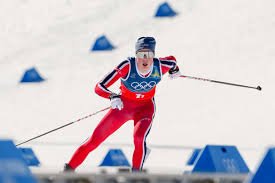
Leading Norway’s Olympic arsenal is cross-country skiing sensation Johannes Hoesflot Klaebo. He’s been a gold medal machine at the Milan Cortina Games, securing five golds to bring his career Winter Games total to a record-breaking 10. His recent triumph came in the men’s team sprint, finishing in 18 minutes, 28.9 seconds after a thrilling finish.
“In a team sprint, a lot of it is about staying in front and skiing as efficiently as possible,” Klaebo explained. “We know from experience that it’s usually decided on the final lap. Luckily, I’ve been in that position a few times now, and I feel comfortable there. We just needed to enjoy it and stay in the mix – and when it came down to the final sprint, that’s when it mattered.”
A System Built for Success
Many attribute Klaebo’s success, and Norway’s overall performance, to a robust and well-developed system. Katerina Neumannova, a retired Czech Olympic champion, highlights Norway’s structure as a key foundation. Cross-country skiing is immensely popular, boasting hundreds of clubs and a large number of young participants.
“When you have so many children, so many trainers and so many clubs all around Norway, it’s much easier to find special talent,” Neumannova told The Associated Press. She also points to the benefit of the Russian team’s absence, the concentration of skilled team officials, and even the lack of snow in lower altitudes across mainland Europe as contributing factors.
The depth of public participation is crucial, providing a continuous stream of elite competitors. “Other countries usually have some gaps between generations, but the Norwegian team is very stable,” Neumannova added. “When one athlete ends, younger ones are already coming up.”
Teamwork and Tradition
Klaebo’s teammate, Einar Hedegart, a 24-year-old Olympic rookie, echoed the importance of teamwork. “There’s definitely some pressure that comes with racing alongside Johannes, so it’s both a relief and a joy to pull off here today,” he said. “To win two gold medals in my first (Olympic) championship is huge.”
Norway’s supremacy is deeply rooted in tradition as the birthplace of Nordic skiing. The medal haul includes ten medals in cross-country, six of which are gold, and nine in biathlon. Anna Odine Stroem dominated ski jumping, while Jens Luraas Oftebro secured both Nordic combined titles. Success extends beyond these core disciplines, with medals also won in freestyle skiing, Alpine skiing, and speedskating.
Finn Dahl, a veteran of the 1994 Lillehammer Olympics, believes Norway’s success is woven into the national lifestyle. Families routinely travel to the mountains, where skiing is simply a natural mode of transportation. “It’s a natural way of sort of moving from one cabin to another,” Dahl explained. “It’s a spirit, it is inside you.”