The Heart of the Internet: Understanding the Power of Modern Data Centers
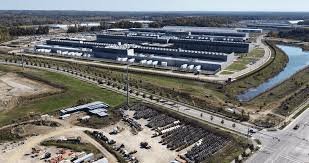
The Invisible Engine of the Digital Age
Every time you send an email, stream a movie on Netflix, or make a mobile payment, you are interacting with a data center. While often invisible to the average user, these massive facilities are the backbone of the modern global economy, housing the computers and networks that store and process the world’s information.
But what exactly happens inside these high-tech warehouses, and why are they becoming more critical than ever in the era of Artificial Intelligence (AI) and Big Data?
What Exactly is a Data Center?
At its core, a data center is a centralized physical facility that houses critical applications and data. It is not just a room full of computers; it is a complex ecosystem of hardware, software, and infrastructure designed to ensure that data is available 24/7 without interruption.
Key components typically include:
- Computing Hardware: High-performance servers and storage arrays.
- Networking Equipment: Routers, switches, and fiber optic cabling to connect the facility to the rest of the world.
- Power Infrastructure: Uninterruptible Power Supplies (UPS) and backup generators to prevent downtime during power outages.
- Cooling Systems: Advanced HVAC and liquid cooling systems to prevent hardware from overheating.
Types of Data Center Architectures
Depending on the needs of a business, different types of data center models are used. Understanding these is key to choosing the right cloud infrastructure strategy:
1. Enterprise Data Centers
These are owned and operated by a single company for its own internal use. They offer maximum control and security but require significant capital investment.
2. Colocation Data Centers
In this model, a business rents space in a third-party facility. The provider handles the power, cooling, and security, while the company provides its own servers.
3. Cloud Data Centers
Managed by giants like Microsoft Azure, Google Cloud, or AWS, these facilities provide virtualized resources that can be scaled up or down instantly via the internet.
4. Edge Data Centers
To reduce latency, edge data centers are smaller facilities located closer to the end-user. This is crucial for technologies like autonomous vehicles and 5G gaming.
The Shift Toward Sustainable and “Green” Data Centers
One of the biggest challenges facing the industry is energy consumption. Data centers require immense amounts of electricity to run servers and cooling systems. To combat this, the industry is shifting toward Sustainable Data Centers.
Innovations include:
- Renewable Energy: Transitioning to wind and solar power to lower the carbon footprint.
- Free Cooling: Building data centers in colder climates (like the Nordics) to use outside air for cooling.
- AI-Driven Efficiency: Using machine learning to optimize power distribution and cooling in real-time.
Why Reliable Data Infrastructure is Non-Negotiable
In today’s market, a few minutes of downtime can result in millions of dollars in lost revenue. This is why redundancy is the golden rule. From redundant power grids to mirrored data backups, the goal is to eliminate any single point of failure.
As we move deeper into the age of AI, the demand for processing power will only grow. The evolution of the data center will determine how fast we can innovate, how securely we can store our memories, and how efficiently we can run the digital world.
Want to learn more about how the cloud is changing business? Check out the latest trends in enterprise cloud computing to stay ahead of the curve.
📰 You May Also Like