The Subtle Shift: From Vaccine Refusal to Vaccine Delay
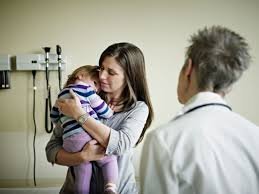
For years, the medical community has focused on the ‘anti-vaccine’ movement—parents who explicitly refuse immunization based on ideology. However, Dr. Edith Bracho-Sanchez, a primary care pediatrician at Columbia University Irving Medical Center, has noticed a more subtle and equally concerning trend: vaccine delay.
In modern pediatric offices, refusal doesn’t always sound like a ‘no.’ Instead, it sounds like “We’re just waiting for Dad,” or “We have a birthday party this weekend; we wouldn’t want the baby to feel under the weather.” While these reasons seem logistical or cautious, the end result remains the same: children leave the clinic unprotected against preventable diseases.
The Dangerous Gap: Why a Few Percent Matters
Some might argue that a slight dip in vaccination rates isn’t a cause for alarm. However, the data suggests otherwise. During the 2025–2026 school year, the percentage of kindergartners in the US who completed the recommended measles, mumps, and rubella (MMR) series dropped to 92.4%, down from 95.2% in 2019–2020.
While a 2.8% decrease seems small, it represents roughly 280,000 children attending school without essential protection. The consequences are already visible. According to the Centers for Disease Control and Prevention (CDC), measles cases have spiked alarmingly:
- n
- 2024: 285 cases, 0 deaths.
- 2025: 2,289 cases, 3 deaths.
- 2026 (as of October): 4,080 cases, 2 deaths.
The “Theoretical” Risk vs. Medical Reality
Why are more parents hesitating? Dr. Bracho-Sanchez points out a cruel irony: vaccines have been too successful. Because these vaccines worked, many current parents and even young doctors have never seen the devastating reality of pertussis, rotavirus, or measles complications.
When a disease feels theoretical, but a potential side effect is highlighted in a viral social media post, the perceived risk becomes distorted. The recent surge in outbreaks serves as a painful reminder that these diseases never disappeared; we simply stopped seeing them because we were vaccinated.
New Strategies for Ensuring Childhood Protection
Since the problem is no longer just explicit refusal, healthcare providers are evolving their approach. Instead of focusing only on skeptics, they are learning to handle the “not today” crowd. Here are some of the most effective strategies being implemented:
- Normalizing Preventive Care: Instead of asking “do you want vaccines today?” doctors are shifting to: “Your child is due for these vaccines today,” treating them as a standard part of health maintenance.
- Turning Intentions into Plans: A vague “maybe next time” is an intention. A scheduled appointment for “Tuesday at 3:30 p.m.” is a plan.
- Direct Education: Discussing the actual symptoms and dangers of the diseases being prevented to counter social media misinformation.
- Collaborative Decision Making: Calling the absent parent during the appointment or reviewing social media concerns together to provide evidence-based answers.
The Bottom Line: Protection Over Labels
Whether a parent identifies as “pro-vaccine,” “anti-vaccine,” or somewhere in between is ultimately irrelevant to the virus. Bacteria and viruses do not care about labels; they only care about a host with a weak immune defense.
To protect the next generation, health systems must make saying “yes” to vaccines as easy as possible by improving access and allowing more time for meaningful parent-doctor counseling. For every child to be safe, the goal must be simple: get the shots today.
For more authoritative information on immunization schedules, visit the World Health Organization (WHO).