Italy’s Beloved Lovers’ Arch Collapses After Storms
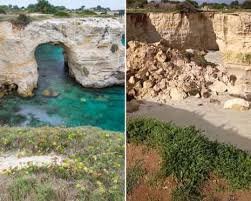
A poignant loss struck Italy on Valentine’s Day as the famed Lovers’ Arch, a stunning natural rock formation in Sant’Andrea, Melendugno, Puglia, succumbed to the relentless forces of nature. The arch, a beloved backdrop for countless proposals, photographs, and cherished memories, collapsed into the Adriatic Sea following days of intense storm surges and heavy rainfall that battered southern Italy.
A Symbol of Salento Lost
For years, the Lovers’ Arch stood as one of the most recognizable symbols of the Salento peninsula, a popular tourist destination known for its breathtaking coastline and charming towns. It wasn’t merely a geological feature; it was woven into the fabric of the region’s identity, representing romance and the enduring beauty of the Italian landscape. “It is a devastating blow to the heart,” lamented Melendugno’s mayor, Maurizio Cisternino. “One of the most famous tourist features of our coastline and of the whole of Italy has disappeared.”
The Forces Behind the Collapse
Local authorities attribute the collapse to the progressive weakening of the rock structure caused by strong winds, rough seas, and persistent heavy rainfall. This event marks the most significant damage inflicted by coastal erosion in the Salento region to date. The arch’s demise serves as a stark reminder of the vulnerability of natural landmarks to the increasing impacts of climate change.
The Rise of Medicanes and Extreme Weather
The storms that led to the arch’s collapse are linked to the growing frequency and intensity of Mediterranean cyclones, known as medicanes. Cyclone Harry, which struck in January, was a particularly destructive example, causing widespread damage to ports, homes, and infrastructure across southern Italy. These warm-core systems are becoming more common due to rising sea temperatures, a direct consequence of the climate emergency.
“With the Mediterranean [experiencing] among its hottest years on record, warmer seas are supercharging the atmosphere and fuelling extreme events,” explains Christian Mulder, a professor of ecology and climate emergency at the University of Catania in Sicily. The destructive power of these cyclones, with winds exceeding 60mph (97km/h) and waves reaching up to 15 metres, has left a trail of devastation along the Italian coastline.
Beyond the Arch: A Wider Pattern of Destruction
The collapse of the Lovers’ Arch is not an isolated incident. Just weeks prior, on January 25th, torrential rain from Cyclone Harry triggered a devastating landslide in Niscemi, Sicily, creating a 4km-long chasm that swallowed roads and homes. These events underscore the urgent need for proactive measures to mitigate the effects of climate change and protect vulnerable coastal areas.
Looking Ahead: Resilience and Intervention
Mayor Cisternino emphasizes the need for “organic intervention” and resource allocation to address the ongoing threat of coastal erosion. “Nature has been overturned: what existed 30 years ago no longer exists.” The loss of the Lovers’ Arch is a somber reminder of the fragility of our natural world and the importance of collective action to safeguard it for future generations. As tourism councillor Francesco Stella poignantly stated, “It’s like a funeral.”