Fire Under the Waves: The Hidden Danger of Deep Sea Mining
Fire Under the Waves: The Hidden Danger of Deep Sea Mining
The allure of a “gold rush” at the bottom of the ocean has long captivated industries and scientists alike. The promise of vast deposits of precious metals makes the deep sea look like the next great economic frontier. However, recent findings from the United States Geological Survey (USGS) have revealed a shocking obstacle: some of these treasures might literally explode into flames upon reaching the surface.
A Literal ‘Landmine’ in the Ocean Depths
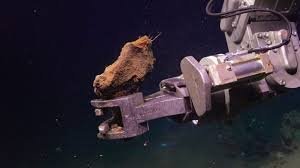
While exploring the possibilities of mining seafloor massive sulfide deposits, researchers stumbled upon an unforeseen hazard. In 2022, during a mission to the USGS in the Escanaba Trough (located off the Oregon–California border), scientists collected metal-sulfide rocks that behaved unexpectedly in the lab.
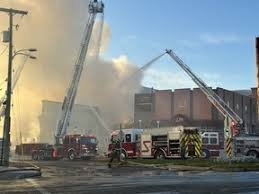
When these samples were freeze-dried and crushed, two of them spontaneously combusted. The resulting chemical reaction sent temperatures soaring above 100°C, completely oxidizing the samples and leaving researchers with a stark warning about the volatility of deep-sea minerals.
The Science Behind the Spark: Why Do These Rocks Burn?
For a long time, it was thought that petroleum trapped in minerals might be the cause of such reactions. However, detailed analysis published in Scientific Reports suggests a different culprit: nanocrystalline marcasite.
Marcasite is a form of iron sulfide that remains stable under the immense pressure and low-oxygen conditions of the ocean floor. However, once brought to the surface, a dangerous chain of events begins:
- n
- Oxygen Exposure: The minerals react violently when exposed to the oxygen-rich atmosphere.
- Mechanical Stress: The process of crushing, grinding, or breaking the rocks during transport provides the activation energy needed for oxidation.
- Thermal Runaway: These factors trigger an exothermic reaction, leading to rapid self-heating and, eventually, fire.
Industrial Risks and the Global ‘Gold Rush’
This discovery comes at a critical moment. The International Seabed Authority (ISA) has already granted exploration contracts for sulfide minerals on the Northern Mid-Atlantic Ridge and the Southwest Indian Ridge. While actual mining hasn’t begun, the potential for rapid-onset fires on transport ships is a liability that cannot be ignored.
The transition from the deep sea to the surface involves dramatic changes in temperature, pressure, and moisture. If these minerals are not handled with extreme caution, the very materials intended for profit could become hazardous waste—or a catalyst for disaster at sea.
More Than Just a Safety Hazard: The Ecological Toll
Beyond the immediate danger to human crews, the push for deep-sea mining raises significant environmental alarms. Many ecologists argue that disrupting these fragile, ancient ecosystems could lead to irreversible biodiversity loss. Between the risk of spontaneous combustion and the potential destruction of seabed habitats, the “deep sea gold rush” is proving to be a high-stakes gamble.
As we look toward the future of resource extraction, the lesson from the Escanaba Trough is clear: the ocean holds secrets that can blow up in our faces if we proceed without rigorous safety regulations and environmental safeguards.
📰 You May Also Like