
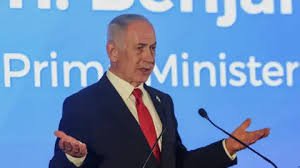
Netanyahu Urges US to Demand Complete Iranian Nuclear Disarmament
Israeli Prime Minister Benjamin Netanyahu has issued a strong call to the United States, urging them to demand that Iran completely relinquish its enriched uranium stockpile and dismantle its enrichment capabilities as a prerequisite for any renewed nuclear agreement. His remarks come as Iranian and US officials prepare for a second round of negotiations in Switzerland, aiming to revive the 2015 Joint Comprehensive Plan of Action (JCPOA).
Speaking in Jerusalem on Sunday, Netanyahu outlined his non-negotiable conditions, stating, “All enriched material has to leave Iran,” and emphasizing that “there should be no enrichment capability.” He believes these measures are crucial not only for Israel’s security but for global stability. This stance reflects Israel’s long-held concerns about Iran’s nuclear ambitions and its potential to destabilize the region.
Iran Signals Willingness to Compromise, But Draws Red Lines
While maintaining a firm position, Iran has indicated a willingness to consider compromises if the US demonstrates a commitment to lifting crippling economic sanctions. Iranian Deputy Foreign Minister Majid Takht-Ravanchi, in an interview with the BBC, stated Tehran is prepared to discuss diluting its 60%-enriched uranium as a gesture of good faith. However, he firmly asserted that halting all enrichment is a “red line” and a violation of Iran’s rights under the Treaty on the Non-Proliferation of Nuclear Weapons (NPT). You can learn more about the NPT here.
US Pressure and Military Posturing
The United States has been increasing pressure on Iran to reach a deal, simultaneously bolstering its military presence in the Middle East. The deployment of two aircraft carriers, including the USS Gerald R. Ford, the US Navy’s largest warship, signals a clear message of resolve. US Secretary of State Marco Rubio, speaking in Slovakia, affirmed that President Trump “prefers diplomacy and a negotiated settlement” over military intervention, but underscored the US’s readiness to protect its interests and allies in the region.
High-Level Meetings and Ongoing Negotiations
Key US officials, including Trump’s top envoy Steve Witkoff and son-in-law Jared Kushner, are scheduled to meet with Iranian negotiators, including Foreign Minister Abbas Araghchi, in Geneva. Rubio acknowledged the historical difficulty in reaching successful agreements with Iran, stating, “No-one’s ever been able to do a successful deal with Iran, but we’re going to try.”
The 2015 JCPOA, which Trump withdrew from, had limited Iran’s nuclear activities in exchange for sanctions relief. Iran’s current offer to dilute its enriched uranium is seen as a potential step towards reviving the agreement. However, concerns remain regarding the scope of Iran’s nuclear program and its ballistic missile development.
Israel’s Broader Concerns
Beyond the nuclear issue, Israel has consistently demanded that any agreement with Iran address its ballistic missile program and its support for proxy groups in the Middle East, such as Hamas and Hezbollah. Netanyahu reiterated these concerns during a recent meeting with President Trump at the White House, expressing “scepticism” about the prospects for a truly effective deal. He emphasized the need for a comprehensive approach that safeguards not only Israel’s security but also regional and global stability.
The situation remains fluid, with negotiations ongoing and the potential for both progress and setbacks. The international community is closely watching developments, recognizing the high stakes involved in preventing Iran from acquiring nuclear weapons.



