
The Clash Between the White House and Independent Journalism
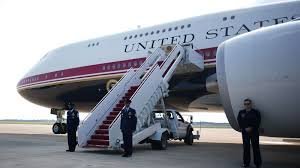
In a move that has sent ripples through the global media landscape, the White House has officially barred CNN from flying aboard Air Force One. This decision comes as part of the network’s critical role in covering the president on behalf of several major television networks, highlighting a growing tension between the administration and the press.
CNN was originally scheduled to accompany the president on his trip to Tennessee for a college football game. This was not just a routine flight; it was part of the White House TV press pool—a specialized, rotating group of journalists tasked with providing coverage in limited-space environments to ensure all networks have access to the news.
A Pattern of Restrictions
This latest action is not an isolated incident. It represents a continuing series of clashes between the Trump administration and the press corps. Recently, the administration attempted to ban CNN, MS NOW, and Politico from the White House entirely, which previously hindered CNN’s ability to fulfill its pool duties during the United Nations General Assembly in New York.
While a judge stepped in to block the total ban and ordered the restoration of credentials, the status of the press pool remains a legal grey area. The conflict has led to a rare show of solidarity among competing networks; Fox, NBC, ABC, and CBS previously refused to perform their pool duties until regular access for all was guaranteed.
Why the Press Pool Matters for Democracy
To the average viewer, a “pool” might seem like a technicality, but it is actually a cornerstone of transparent governance. The pool system ensures that:
- n
- Shared Access: Video feeds and information are shared across all major networks, preventing any single entity from monopolizing information.
- Independent Observation: It prevents the government from producing only “curated” content.
- Efficiency: It allows for coverage in high-security or space-restricted areas where the entire press corps cannot fit.
“America cannot have state TV,” warned Weijia Jiang, former president of the White House Correspondents’ Association. “That’s what makes America America… you need independent actors to be the observers.”
The Legal Battle Ahead
The tension is now moving toward the courtroom. News organizations have been given a deadline to file for a preliminary injunction, which could potentially put the promised bans on hold for a longer period. As the administration continues to produce its own live streams and controlled content, the fight for independent journalism becomes more critical than ever.
For more information on the importance of a free press in a democratic society, you can explore the resources provided by Reporters Without Borders, an organization dedicated to protecting journalists worldwide.
As the situation evolves, the legal outcome will likely define the boundaries of presidential power versus the First Amendment rights of the press.



