
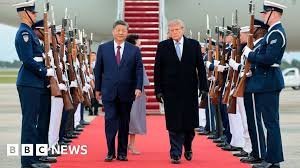
Xi Jinping vs. Donald Trump: The High-Stakes Power Play for Global Dominance
On the surface, it looked like a masterclass in diplomacy. Red carpets, lavish banquets featuring sesame-crusted sea bass, and the heartwarming return of panda diplomacy. But beneath the pageantry of the latest summit between Xi Jinping and Donald Trump lies a cold, calculating game of geopolitical chess.
For China, the objective is clear: ensure the United States stops attempting to contain its rise as a global superpower. From trade and technology to the volatile situation in Taiwan, Xi Jinping is fighting to secure China’s place at the top of the world order.
The Trade Tightrope: Short-Term Truces, Long-Term Tension
While the optics suggested a warming relationship, the economic reality remains frosty. The much-anticipated trade truce—a pause in the tit-for-tat tariff war—was extended by only a few months, moving the deadline from November to January. This was a far cry from the year-long reprieve Beijing had hoped for.
This short extension sends a loud message: Washington wants more concessions before offering long-term stability. Key disputes continue to loom, including:
- n
- Tariffs: The ongoing battle over import taxes that hamper global trade.
- Rare Earth Elements: China’s dominant grip on the minerals essential for modern tech.
- Semiconductor Access: The struggle for advanced US chips, critical for next-gen innovation.
For Xi Jinping, the pressure is internal. While China’s exports are hitting record highs, the domestic economy is struggling. High youth unemployment and a slumped property market mean that maintaining overseas market access is no longer just a goal—it is a necessity for survival.
The Taiwan ‘Red Line’ and the Art of the Deal
Taiwan remains the most dangerous flashpoint in the relationship. Xi Jinping has reiterated that US arms sales to the self-governing island are a “red line” that cannot be crossed. He warned that mishandling this issue could lead the two superpowers to “collide or even enter into conflict.”
Interestingly, Donald Trump has treated these security concerns as a “negotiating chip.” By delaying a $14 billion arms package, Trump signaled a willingness to trade security guarantees for economic gains—a dynamic that Xi likely attempted to exploit during their closed-door talks.
AI: The New Frontier of Control
The summit also touched upon the existential risks of Artificial Intelligence. Following warnings from Anthropic’s CEO Dario Amodei regarding the need to slow down AI development for safety, the two leaders shared a brief, contrasting dialogue.
While Xi Jinping emphasized that AI must “always be under human control,” Trump dismissed the fears of human extinction as a “hoax.” This divide highlights a fundamental difference in how the two powers view the future of technology: one as a tool requiring strict state governance, the other as an engine of unrestrained growth.
Panda Diplomacy and the War of Optics
If the policy wins were marginal, the visual victory was absolute. The arrival of pandas Ping Ping and Fu Shuang in Atlanta served as a soft-power masterstroke. In China, social media was flooded with memes depicting Xi as the impassive, steady leader compared to a more erratic Trump.
By managing one of the world’s most unpredictable leaders with grace and grandeur, Xi Jinping successfully cemented his image at home as an equal to the US President.
Final Thoughts: A Fierce Competition Hidden in Plain Sight
The tea, the archives, and the pandas are mere distractions from the underlying truth. While the rhetoric speaks of “great friendship,” the reality is a fierce competition for supremacy. Xi Jinping is not looking for a friend in Washington; he is looking for a path to dominance that the United States is no longer willing to grant without a fight.
For more insights on international relations and global trade, you can explore the latest reports from the Council on Foreign Relations.



